The Glass I Never Drank
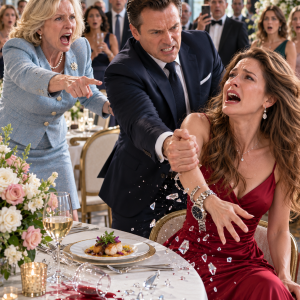
The waiter set my wineglass down and didn’t let go.
His fingers stayed around the stem for half a second longer than they should have.
Then he leaned toward me as if he were explaining the evening special.
“Ma’am, please don’t drink this.”
I looked up at him.
He was young, maybe twenty-four or twenty-five, with a white shirt, black vest, and the strained expression of someone trying very hard not to attract attention.
Across the table, my daughter, Rachel, was laughing at something her husband had said.
I kept my voice low.
“Why?”
The waiter glanced toward them.
“When you went to the restroom, your son-in-law put something in your glass.”
Then he straightened, picked up an empty bread plate, and walked away.
I looked at the wine.
A perfectly ordinary glass of cabernet.
Dark red. Clear crystal. Nothing floating in it.
My son-in-law, Mark, smiled at me from across the table.
“Everything okay, Linda?”
I had spent thirty-one years working in forensic toxicology.
So I smiled back.
“Perfect.”
And I raised the glass to my lips.
I just didn’t drink.
Mark watched me long enough to notice.
That was the first thing that bothered me.
The second was that my daughter did too.
I pretended to swallow, lowered the glass, and reached for my water.
Rachel immediately relaxed.
That bothered me more.
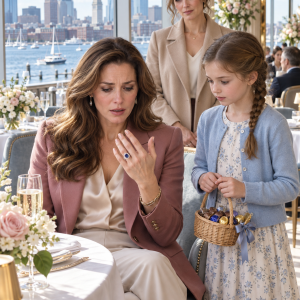
The restaurant was on the second floor of a hotel near the Chicago River. Mark had chosen it because, according to him, we hadn’t had a “proper family dinner” in months.
He had ordered the wine.
He had poured my first glass himself.
And over dessert, he had already asked me three questions about whether I still handled my investments personally.
At the time, I’d treated it as conversation.
Now I remembered every word.
“Mom, you really should simplify things.”
That had been Rachel.
Then Mark:
“At some point, managing all those accounts becomes exhausting.”
I had laughed.
“I’ll let you know when I’m exhausted.”
Mark hadn’t laughed.
The waiter passed our table again.
I didn’t look at him.
Instead, I lifted the wineglass once more and tilted it toward my mouth.
Mark’s eyes moved to it.
I touched the rim to my lips.
Then I set it down.
Ten minutes later, I excused myself.
“I’m going to wash my hands.”
Rachel reached for my wrist.
Not hard.
Just quickly.
“Again?”
I looked at her hand.
She released me.
“Sorry. I just meant—you okay?”
“Fine.”
I carried my purse with me.
On my way back, I stopped near the service station and found the waiter stacking clean glasses.
“What’s your name?”
“Evan.”
“Evan, I need a small container with a tight lid.”
His face changed.
He knew I believed him.
He disappeared into the kitchen and returned with a small plastic condiment cup.
I went into the restroom, took an unused sample vial from the emergency kit I kept in my purse, and transferred a small amount of wine into it.
Old habit.
Most people don’t carry sample vials.
People who have testified in poisoning cases for three decades sometimes do.
I sealed it, placed it inside a zippered compartment, and returned to dinner.
Mark was checking his phone.
Rachel was staring at my wineglass.
“You barely touched it,” she said.
“I think it’s hitting me harder than usual.”
Mark looked up immediately.
“Really?”
One word.
Too interested.
I nodded.
“I’m getting sleepy.”
He leaned back.
“Then maybe you should head home.”
I watched him.
No concern about why half a glass of wine had suddenly made me unusually drowsy.
No offer to drive me.
No suggestion that I stay with them.
Just go home.
I put on my coat.
Rachel hugged me near the entrance.
Her arms felt stiff.
“Text me when you’re in bed.”
Not when I got home.
When I was in bed.
I drove three blocks, pulled into a pharmacy parking lot, and sat there with both hands on the steering wheel.
Then I called someone I had worked with for seventeen years.
His name was Tom Wilson.
He ran a private analytical laboratory outside Evanston.
“Tom, I need a favor tonight.”
“How urgent?”
I looked at the sealed vial beside me.
“I need to know what’s in a glass of wine before tomorrow morning.”
There was a pause.
“Bring it.”
That was my first move.
I didn’t call Rachel.
I didn’t confront Mark.
I didn’t even call the police yet.
I wanted to know exactly what I was dealing with.
At 11:42 P.M., I Got My Answer
Tom called me less than three hours later.
I was sitting at my kitchen table with every light downstairs turned on.
My phone buzzed.
“Linda.”
His voice had changed.
“I’m listening.”
“Where did this come from?”
“Tell me first.”
He named the sedative.
I knew it immediately.
Then he gave me the estimated concentration.
I asked him to repeat it.
He did.
I looked at the clock above my stove.
“You’re sure?”
“I ran it twice.”
The amount wasn’t therapeutic.
It wasn’t accidental contamination.
Based on the concentration in the wine, if I’d finished that glass, I likely would have become severely impaired and remained unconscious or barely responsive for hours.
Tom lowered his voice.
“Linda, somebody put this in there.”
“I know.”
“Are you safe?”
I looked toward my front door.
“For tonight.”
I asked him to preserve the sample and document everything.
Then I called my attorney, Susan Miller.
Susan had handled my estate planning for more than a decade.
Six months earlier, she had also helped me make a change that Mark knew nothing about.
She answered on the fourth ring.
“Linda? What’s wrong?”
I told her.
She didn’t interrupt once.
When I finished, she said:
“Don’t sign anything.”
“I wasn’t planning to.”
“Don’t let them take you anywhere either.”
That sentence stayed with me.
Because three weeks earlier, Mark had brought up assisted living.
Not because I needed it.
I was sixty-eight, still consulting part-time, driving, traveling, managing my own finances, and walking four miles most mornings.
He had mentioned it casually while helping me carry groceries.
“You know, some of those senior communities are basically resorts now.”
Rachel had mentioned memory care two days later.
Then came questions about my will.
My investment accounts.
The house.
Whether Rachel was still my primary beneficiary.