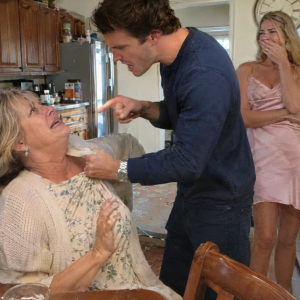
PART 1 — THE NIGHT MY MOTHER WOULDN’T LET ME TAKE MY SHOES
“Put those shoes down, Emily! If you’re so determined to act like a grown woman, let’s see how far you get without us!”
My mother stood between me and my sneakers while my father held the front door open. Every bank card I owned was sitting on their kitchen table, and outside, a cold March rain was falling across our neighborhood.
Less than forty-eight hours later, an attorney would place a certified delivery receipt in front of me and ask a question I wasn’t prepared to answer.
“Emily, are you absolutely certain nobody in your family ever gave you this letter?”
But that Thursday evening, I still believed my parents were punishing me for refusing to obey them. I didn’t understand why my twenty-eighth birthday had suddenly made my private finances so important to them.
The Price of Living Under My Father’s Roof
My name is Emily Carter, and at twenty-eight, I was working as a freelance graphic designer in Dallas, Texas. After a long-term contract ended, I’d temporarily moved back in with my parents, Richard and Susan, while rebuilding my client base and saving for another apartment.
I paid them $650 a month, contributed toward groceries and utilities, and covered my own professional and personal expenses. Unfortunately, my father seemed to believe that allowing me to occupy my childhood bedroom entitled him to supervise every aspect of my adult life.
“You’d be amazed how quickly you’d run through your savings if you didn’t have us,” he’d remind me whenever I purchased something for myself.
My mother usually defended him. “Your father has worked hard his entire life. Don’t get an attitude just because he’s trying to teach you a little responsibility.”
For nearly a year, I tried to keep the peace. Then, shortly after my twenty-eighth birthday, Dad’s questions about my finances became unusually persistent. He wanted to know whether I’d received any unexpected payments, whether I’d opened another account, and whether I was expecting money from anyone besides my clients.
One Thursday evening, he sat across from me at the kitchen table and extended his hand.
“Give me your phone. I want to see your banking app.”
I looked up from my laptop. “What for? I paid you on Tuesday.”
“That’s not what I’m asking about. I want to know how much money you’ve got altogether.”
“Dad, that’s private.”
He gave a short, humorless laugh. “Private? You’re sitting in my kitchen, using my electricity, and sleeping under my roof. Don’t start lecturing me about privacy.”
Mom stopped wiping the counter and sighed as though I’d deliberately ruined her evening.
“Just show him, Emily. Good grief, you’re almost thirty years old, and we’re still having these ridiculous arguments with you.”
I closed my laptop and told them that being almost thirty was precisely why I wouldn’t be handing over my phone. I wasn’t asking them to support me financially, and I had every intention of moving out once my next contract was underway.
Dad stared at me for several seconds before picking up his own phone.
“All right. Have it your way.”
Forty-Three Dollars and a Pair of Wet Socks
Within minutes, notifications began appearing on my screen. My debit card had been restricted, and recovery information associated with an older financial account had been changed.
Dad and I still shared a checking account we’d opened when I went to college. Although I’d established separate accounts as an adult, I’d continued using the older one for certain payments and had neglected to remove some outdated recovery arrangements elsewhere.
“Dad, what did you just do?”
He placed his phone on the table. “Maybe now you’ll understand that independence comes with responsibilities.”
Before I could contact the bank, Mom returned from the mudroom carrying my handbag. She emptied it onto the kitchen table and began gathering my debit cards, credit card, and emergency payment card.
“Mom, those are mine. Give them back.”
“Oh, you’ve got some nerve! After everything we’ve done for you, you stand there acting like we’re trying to take something from you?”
She pushed my driver’s license and forty-three dollars toward me. Dad walked to the front door and opened it, allowing a gust of cold air into the hallway.
“You can come back when you’re ready to apologize.”
I honestly thought he was bluffing. I looked from him to Mom, waiting for one of them to acknowledge how absurd the situation had become.
“Where am I supposed to go? It’s freezing outside.”
“You should’ve considered that before you decided you didn’t need your parents,” Dad replied.
When I reached for my white sneakers beside the entryway bench, Mom stepped in front of them.
“Those stay here.”
“Mom, please. They’re my shoes.”
“Don’t stand there arguing with me over a pair of shoes! You want to be independent? Go buy yourself another pair.”
I turned toward Dad. “Please, Dad. At least let me take my shoes.”
He didn’t even look at them.
“Your mother made herself perfectly clear. Maybe a little time outside will teach you some gratitude.”
I took my phone, identification, and cash. As I stepped onto the porch, I heard Mom tell Dad that I wouldn’t last an hour before coming back.
The door closed behind me, and a moment later, the porch light went dark.
I stood there remembering a shopping trip with my grandmother when I was nine years old. I’d outgrown my school shoes, but I’d been afraid to tell Mom because she’d complained about how expensive everything was becoming.
Grandma Margaret had noticed the way I walked and taken me to buy another pair. When I’d apologized for costing her money, she’d looked genuinely puzzled.
“Sweetheart, you never have to apologize for needing shoes that fit.”
Standing outside my parents’ house almost twenty years later, I wished more than anything that she were still alive.
The Stranger Who Showed Me More Kindness
By the time I reached the sidewalk, my socks were soaked. I considered returning to the house and apologizing, even though I couldn’t identify anything I’d done wrong.
Instead, I opened my phone, took screenshots of the banking notifications, and saved them to an email account my father couldn’t access. Then I walked toward a gas station about half a mile away.
Whatever happened next, I needed to protect my remaining money.
The cashier noticed me standing near the restroom and brought me paper towels and a bottle of water. He didn’t ask why I was wearing socks instead of shoes. He simply offered me somewhere to sit while I arranged a ride.
That small kindness nearly made me cry.
With eighteen percent battery remaining, I called Naomi Vega, a former client who’d become a good friend. Months earlier, after I’d mentioned some difficulties at home, she’d told me I could contact her if I ever needed somewhere to stay.
“Naomi, I’m so sorry to bother you this late.”
“Emily? What’s wrong?”
I tried to explain without crying, but when I reached the part about my mother taking my cards, my voice gave way.
“I don’t know where else to go.”
“Tell me where you are. I’ll come get you.”
Twenty minutes later, she arrived carrying a warm coat, a blanket, and a pair of inexpensive flip-flops. When she saw my wet socks, she stopped beside the passenger door.
“Honey, where are your shoes?”
“My mother wouldn’t let me take them.”
Naomi stared at me for a moment before opening the door.
“Get in, sweetheart. You can explain everything when you’re warm.”
At her house, she made me something to eat and offered me her guest room. When I apologized for inconveniencing her, she shook her head.
“Emily, you called a friend because you needed help. You didn’t do anything that requires an apology.”
I couldn’t remember the last time somebody had said that to me.
The Emails My Parents Never Mentioned
Early the following morning, Naomi and I sat at her kitchen table reviewing my financial accounts. I contacted the relevant banks, reported the unauthorized changes, requested replacement cards, and began separating my remaining financial arrangements from my father’s.
While checking an old email address I’d rarely used since college, I discovered three unread messages from a Dallas law firm.
Their subject lines were strangely formal.
Final Attempt to Contact Beneficiary.
Identity Verification Pending.
Trust Distribution on Hold.
Every message mentioned my grandmother, Margaret Bennett, who had passed away eighteen months earlier.
My mother had always described Grandma as difficult, bitter, and financially irresponsible. During the final years of Grandma’s life, Mom discouraged me from visiting her, claiming that she preferred to be left alone.
After the funeral, she’d told me that Grandma had practically nothing left.
“Between her medical bills and that ridiculous property she insisted on maintaining, there wasn’t much of an estate. Don’t waste your time wondering about it.”
I’d believed her. Now I was looking at correspondence suggesting that Grandma had established a trust in my name.
Naomi read the emails over my shoulder.
“Did your mother ever mention an inheritance?”
“No. She specifically told me there wasn’t one.”
“Then you need to speak to this attorney before you speak to either of your parents.”
I independently verified the law firm’s contact information and called when its office opened. After confirming several details, a receptionist transferred me to an estate attorney named Evelyn Mercer.
“Emily Carter? Margaret Bennett’s granddaughter?”
“Yes. I’m sorry I’m only responding now. I just found your emails.”
There was a brief silence.
“Emily, we’ve been attempting to reach you through several different channels. Are you currently living at your parents’ address?”
I explained what had happened the previous evening.
Evelyn didn’t interrupt. When I finished, she asked whether I could come to her office that afternoon and bring identification.
“There are some documents I think you should see personally.”
My Grandmother Hadn’t Forgotten Me
Evelyn’s office was in a quiet building north of downtown Dallas. When I arrived, she placed a thick folder on the conference table, with my full legal name printed across the cover.
“Your grandmother established a trust several years before she passed away,” she explained. “You’re one of its beneficiaries, and certain assets were designated for distribution to you when you reached twenty-eight.”
I stared at her. “What kind of assets?”
She showed me photographs of a beautiful gated estate outside Dallas, with a long driveway, mature trees, and a spacious house surrounded by gardens.
I recognized it immediately. Grandma had shown me photographs of that property when I was younger, but Mom later claimed she’d been forced to sell it.
“This house is part of my inheritance?”
“Yes. Along with substantial financial assets that will remain subject to the trust’s provisions.”
I sat back in my chair, struggling to understand how something so significant could have existed without my knowledge.
Evelyn explained that the initial correspondence following Grandma’s passing had been sent to my parents’ address. Further notices had followed as my twenty-eighth birthday approached.
She placed several certified delivery receipts in front of me.
Related Posts

My Husband Took Me to His Company’s Annual Gala in Miami, Looked His Boss Straight in the Eye, and Said, “Oh, She’s Not My Wife. She’s Just the Nanny.” When His Sister Poured Red Wine Down My White Silk Dress, I Begged Him to Stand Up for Me. Instead, He Pointed at the Floor and Snapped, “Get Down There and Clean It Up! Haven’t You Embarrassed Me Enough?” After Seven Years of Marriage, I Finally Stopped Making Excuses for Him. I Set Down the Napkins and Walked Toward the Stage. The Moment His CEO Handed Me the Microphone, My Husband’s Smile Disappeared. He Had No Idea Who He’d Just Humiliated in Front of the Entire Company.

Two Days Before Thanksgiving, My Mother Texted, “Only Well-Behaved Grandchildren Are Invited This Year. Leave Your Daughter at Home.” My 8-Year-Old Burst Into Tears and Whispered, “Mommy, I Promise I’ll Be Good.” I Had Spent Five Years Paying for My Family’s Holidays, but That Was the Last Straw. I Replied, “Enjoy Your Dinner,” and Quietly Canceled the Credit Card Funding Their $4,850 Feast. On Thanksgiving Evening, They Sent Me Photos, Bragging About How Much Better Dinner Was Without My Little Girl. I Sent Back a Single Photograph. Less Than an Hour Later, My Mother’s Frantic Calls Began—A Guest at Her Table Had Just Discovered Who Was Really Paying for Their Perfect Life…

My Baby Girl Was Born With So Much Hair That the Nurses Put It in a Tiny Ponytail, but My Mother-in-Law Took One Look at Her and Insisted We Cut It Off Before She Ever Saw Herself in a Mirror. I Refused. Two Days Later, I Came Home to Find Every Mirror in Our House Had Been Removed. That Evening, I Overheard My Husband Whisper, “She Hasn’t Noticed It Yet.” When I Lifted the Hair at the Back of My Daughter’s Neck, He Finally Showed Me a Photograph From More Than 30 Years Ago—and I Began to Understand Why His Mother Was So Desperate to Cut My Baby’s Hair…
At My Grandson’s Tenth Birthday Dinner, He Crossed the Line, and Instead of Correcting Him, My Grown Son Burst Out Laughing. My Daughter-in-Law Smirked and Said, “Oh, Get Over Yourself. Nobody Here Cares About Your Feelings.” I Quietly Picked Up My Purse and Went Home. Before Midnight, I Canceled a Payment I’d Been Making for Three Years. At 5:42 the Next Morning, My Son Called in a Panic. Funny How Quickly He Remembered I Was His Mother When He Needed Something From Me. For the First Time in Years, I Let Him Hear the One Word He Never Expected From His Mother: “No.”