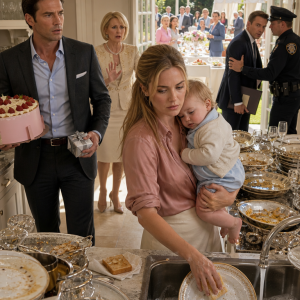
The Woman Everyone Had Underestimated
By nine fifteen on a gray Monday morning, nearly every wooden bench inside Courtroom Four of the Fairfax County Courthouse was occupied.
The hearing had attracted far more attention than an ordinary divorce case. Local business reporters sat near the back of the room, quietly reviewing notes. Several employees from Calderon Transit Group had also arrived, pretending they were only there to support their chief executive.
Everyone knew the name Harrison Calderon.
For more than a decade, he had been presented as one of Northern Virginia’s most impressive self-made businessmen. His photograph appeared in regional magazines, charity brochures, transportation conferences, and newspaper articles celebrating his leadership.
According to the story Harrison told publicly, he had built his transportation company from nothing.
I knew that story better than anyone because I had helped him create it.
My name is Meredith Vale.
For fourteen years, I had stood beside Harrison during awards ceremonies, fundraising dinners, and corporate celebrations. Whenever people congratulated me for being a supportive wife, I smiled politely.
I never explained that the company they praised him for building had originally been funded with my inheritance.
I never explained that I had written the first business plan, negotiated the first vehicle contracts, managed the payroll, applied for the licenses, and kept the business operating during the years when Harrison was still learning how to lead it.
I stayed silent because I believed protecting my husband’s confidence was part of protecting our marriage.
Eventually, my silence allowed him to rewrite our entire history.
That morning, Harrison entered the courtroom surrounded by three attorneys. He wore a tailored navy suit, polished shoes, and the controlled expression he normally used during televised interviews.
Beside him walked Celeste Monroe, the company’s communications director.
Celeste had been part of Harrison’s life long before our separation became public. She wore an ivory dress and carried a designer handbag. As she took the seat behind Harrison, she rested one hand lightly on his shoulder, as if reminding everyone that she expected to become the next Mrs. Calderon.
Harrison’s legal team had one simple argument.
He had created the company.
He had earned the fortune.
He owned the family home.
He had the financial ability to give our children a stable future.
According to them, I was a woman without a career, without meaningful assets, and without the resources necessary to raise our nine-year-old twins, Ellis and Rowan.
They believed the prenuptial agreement protected Harrison’s business interests.
They also believed it would help him receive primary custody.
The Empty Seat Beside My Attorney’s Table
Judge Evelyn Marston entered the courtroom at nine thirty.
She reviewed several documents before looking toward the empty chair on my side of the room.
“Where is Mrs. Vale?”
Harrison glanced at his watch.
“Meredith has never been especially good at respecting other people’s time.”
Celeste lowered her head, but I saw the smile she tried to hide.
Judge Marston looked directly at her.
“Ms. Monroe, you are attending this hearing as an observer. You will not comment unless the court asks you a question.”
Celeste’s smile disappeared.
Harrison’s lead attorney, Malcolm Reeve, stood and began presenting their request.
He described Harrison as a devoted father and a respected executive. He discussed the family’s large home in McLean, the children’s private school, their savings accounts, and the expensive opportunities Harrison claimed only he could continue providing.
Malcolm had just started explaining why I should receive limited parenting time when the courtroom doors opened.
I walked inside holding the hands of our sons.
Ellis wore a charcoal jacket and kept his eyes lowered. Rowan held my hand so tightly that his fingers felt cold.
Harrison’s confident expression vanished.
Celeste leaned toward him.
“Why did she bring them here?”
Judge Marston heard her.
“Ms. Monroe, that is your final warning.”
I approached the front table.
“I apologize for being late, Your Honor. The boys asked to come after hearing several things about the case.”
The judge looked at Ellis and Rowan with concern.
“Children are generally protected from proceedings like this.”
“I understand. However, their father told them I had abandoned the family, that I could no longer provide for them, and that they would soon be moving into his house with Ms. Monroe. They were frightened, and I did not want them to believe their future had already been decided without anyone listening to them.”
Harrison rose slightly from his chair.
“That is not what I said.”
Rowan looked directly at him.
Harrison slowly sat down.
Judge Marston instructed a court officer to seat the boys in a quiet area beside the clerk, where they could remain close without sitting directly between their parents.
Then she asked Malcolm to continue.
The Version of Me Harrison Wanted the Court to Believe
For the next twenty-five minutes, Harrison’s attorney described me as though I had barely existed during my own marriage.
He explained that Harrison had spent years building Calderon Transit Group into a company with more than four hundred employees and contracts throughout Virginia, Maryland, and Washington, D.C.
He emphasized that I had not held a traditional full-time job since the twins were toddlers.
He did not explain that Ellis had needed years of specialized educational support.
He did not mention Rowan’s recurring respiratory appointments.
He did not discuss the school meetings, therapy sessions, medical schedules, household responsibilities, and company paperwork I had managed while Harrison traveled.
Instead, Malcolm described me as financially dependent and professionally inactive.
When he finished, he requested that Harrison receive primary custody while I received alternating weekends until I demonstrated stable employment.
Judge Marston turned toward me.
“Mrs. Vale, where is your attorney?”
“I am representing myself today.”
Harrison leaned back in his chair.
The satisfaction on his face was almost immediate.
Judge Marston removed her glasses.
“You understand that your husband has an experienced legal team and that today’s decisions may significantly affect your family?”
“Yes, Your Honor.”
“Then you may respond.”
I opened my leather bag and removed a sealed blue envelope.
Inside were the original incorporation documents for Calderon Transit Group.
I handed them to the clerk.
Judge Marston carefully opened the envelope and began reading.
For several moments, her expression revealed nothing.
Then she reached the original ownership page.
She stopped.
She read it once more.
The courtroom became completely quiet.
The Name on the Ownership Page
Judge Marston raised the document.
“Mr. Calderon, can you explain why Meredith Elaine Vale is listed as the original owner of seventy-six percent of Calderon Transit Group?”
Harrison stared at her.
His face seemed to lose all expression.
Malcolm turned toward him so quickly that several pages slipped from his folder.
Celeste frowned.
“What does that mean?”
The judge continued.
“The filing identifies Mrs. Vale as the majority shareholder at the time of incorporation. It also states that the initial capital was contributed from her separate inheritance.”
Harrison finally spoke.
“That company had almost no value when those papers were signed.”
Judge Marston’s eyes narrowed.
“That was not my question. Are these documents authentic?”
He looked at his attorneys.
Then he looked at me.
“Yes, but Meredith signed the paperwork because we were married. I was the person running the business.”
“So you acknowledge that she legally owned the majority interest.”
Harrison hesitated too long.
Malcolm stood.
“Your Honor, we respectfully request a short recess to review documents that were not previously included in our file.”
Judge Marston placed the papers on her desk.
“You may have fifteen minutes.”
What Really Happened Before the Company Became Successful
The moment we entered the hallway, Harrison walked toward me.
His voice was quiet, but his anger could not hide his fear.
“What are you trying to do?”
“I am correcting the story you brought into that courtroom.”
Celeste stepped closer.
“Harrison, you told me she had never been involved in the company.”
He ignored her.
Fourteen years earlier, Calderon Transit Group had not been a major regional company.
It had been two used passenger vans, a folding table in our rented townhouse, and more unpaid invoices than customers.
Harrison had confidence, energy, and an extraordinary ability to persuade people. He could walk into a room of strangers and make them believe the future was already waiting for him.
What he did not have was capital, strong credit, operational experience, or patience for financial details.
I had all four.
My grandmother had left me a small property in Arlington and an investment account. I sold the property, closed the account, and used nearly every dollar to launch the company Harrison and I had planned together.
I registered the business.
I developed the operating budget.
I researched commercial insurance.
I handled driver records, tax filings, payroll systems, licensing applications, and compliance requirements.
I also kept my position as an administrative coordinator at a medical network for two years because my salary paid our household expenses while the company struggled.
Harrison called it our company during those early years.
When the first major airport contract arrived, he kissed me in our kitchen and said, “We did it.”
After Ellis and Rowan were born, I reduced my daily involvement. The twins needed more care than we expected, and Harrison assured me that the company was stable.
At first, I still reviewed financial reports from home.
Then Harrison hired additional staff.
Soon, he stopped sending me the reports.
During interviews, he began calling himself the founder.
Later, he called himself the sole founder.
I noticed, but I did not challenge him publicly.
I thought preserving peace was more important than receiving recognition.
I did not understand that every year I remained silent, Harrison became more comfortable erasing me.
The Records He Believed Had Disappeared
Malcolm approached me in the hallway.
His confident courtroom manner was gone.
“Mrs. Vale, do you possess additional company documents?”
“Yes.”
“What kind?”
“Capital contribution statements, tax filings, shareholder reports, loan guarantees, payroll records, board correspondence, licensing applications, emails, and copies of every proposed ownership transfer.”
Harrison stared at me.
“You kept all of that?”
“I kept everything connected to the money I invested and the work I performed.”
Celeste looked at him.
“You said she signed her interest away years ago.”
“This is not the place to discuss it,” Harrison replied.
His refusal to answer said more than any explanation could have.
Across the hallway, Ellis and Rowan stood with the court officer.
Ellis pretended to study a painting on the wall.
Rowan watched us openly.
I walked toward them and knelt.
“Are you boys doing okay?”
Ellis looked at me.
“Did Dad lie when he said you never helped with the company?”
I chose my words carefully.
I did not want our children to feel responsible for judging either parent.
“Your father left out important parts of the story. But the adults are going to handle that. You do not have to choose sides.”
Rowan reached for my hand.
“Are we still going home with you?”
“Yes. You are coming home with me today.”
Ellis looked toward Harrison.
“Dad said Celeste had already decorated our bedrooms.”
Before I could answer, the courtroom clerk called everyone back inside.
The Agreement Harrison Could Not Use
When the hearing resumed, the balance in the room had changed.
Harrison no longer appeared relaxed.
Celeste sat several inches farther away from him.
Malcolm spoke with greater caution.
Judge Marston asked me to explain the original ownership arrangement.
“The company began with my inheritance,” I said. “I held seventy-six percent because I provided nearly all of the startup capital and personally guaranteed the original loans. Harrison managed sales and transportation operations. I managed administration, finance, compliance, and contracts.”
Malcolm stood.
“Did you receive a formal salary?”
“No. We needed the money to keep the business operating.”
“Then you were not officially employed by the company.”
“I was a majority owner who performed operational work without immediate compensation.”
He opened a copy of our prenuptial agreement.
“This agreement protects business assets registered in Mr. Calderon’s name.”
“That is correct.”
“Then the company should remain separate property.”
“Only if the ownership interest was legally transferred into his name.”
Malcolm stopped speaking.
Judge Marston turned to another document.
“There is a proposed transfer agreement from seven years ago. It appears that Mrs. Vale never signed it.”
Harrison answered before his attorney could stop him.
“She refused to sign.”
I turned toward him.
“You handed it to me four days after my grandmother’s memorial and told me it was an insurance update.”
Judge Marston reviewed the document carefully.
“This agreement would have transferred Mrs. Vale’s majority interest to Mr. Calderon for one hundred dollars.”
Celeste looked at Harrison in disbelief.
Harrison stared at the table.
The Question Was Never Only About Money
I faced the judge.
“Your Honor, I am not presenting these records to embarrass Harrison. I am presenting them because he asked this court to believe that I had no professional ability, no financial resources, and no role in creating the life our children have known.”
Judge Marston nodded.
“Where have you and the children lived since the separation?”
“In a rented home in Vienna, six minutes from their school.”
“Who pays the household expenses?”
“I do.”
“From what source of income?”
I handed the clerk a second folder.
For the previous two years, I had quietly worked as an independent operations consultant. I assisted small transportation companies with licensing, insurance systems, contract proposals, compliance procedures, and financial organization.
I had not returned to the industry for revenge.
I returned because I remembered that I was good at it.
The contracts inside the folder showed that my earnings covered our rent, insurance, education costs, household expenses, and savings.
Malcolm reviewed the figures.
Harrison looked stunned.
“You told me you were helping a few business owners.”
“They were clients.”
“Why did you never tell me you were earning this much?”
I looked directly at him.
“Because you stopped asking meaningful questions about my life years ago.”
No one in the courtroom moved.
Malcolm shifted his argument.
“Mrs. Vale, are you claiming that Mr. Calderon is incapable of being a responsible father?”
“No.”
Harrison looked up.
“He loves Ellis and Rowan. He attends their soccer games when his schedule allows. He remembers that Rowan dislikes chocolate milk, but he often forgets that Ellis becomes anxious before speaking in front of his class. He is not an uncaring father. However, during this divorce, he has focused more on winning than on protecting the children from adult conflict.”
Ellis lowered his head.
Harrison looked toward him, and for the first time that morning, shame replaced anger.
The Judge’s Temporary Decision
Judge Marston did not make a final decision about custody that day.
Instead, she ordered that Ellis and Rowan remain with me during the school week. Harrison would receive alternating weekends and one midweek dinner visit.
Both parents were instructed to stop discussing legal matters, financial disputes, or future custody arrangements with the children.
The judge also ordered a complete independent review of the company’s ownership history, voting rights, shareholder transfers, and financial records.
That order seemed to concern Harrison more than the custody schedule.
When the hearing ended, there was no celebration.
There were only closing folders, quiet conversations, and the sound of rain touching the courthouse windows.
Ellis and Rowan came directly to me.
Outside, Rowan stopped beside our car.
“Mom, did you really create Dad’s company?”
“I helped create it. Your father and I both worked very hard in the beginning.”
“Then why did you let everyone think he did it alone?”
The honest answer was complicated.
I had confused silence with kindness.
I had protected Harrison’s public image until I almost disappeared from the life we had built together.
Instead, I said, “I wanted you to know your father as your father, not as someone I was competing against.”
Ellis remained quiet for a moment.
Then he asked, “Can a person love you and still make a selfish choice?”
I placed one hand on his shoulder.
“Yes. People can care about each other and still make choices that cause deep disappointment. Loving someone does not mean pretending those choices never happened.”
The Phone Call After Midnight
That evening, after the twins had gone to sleep, I sat at the kitchen table reviewing the court documents.
Ellis’s science notebook rested beside a bowl of oranges. Rowan’s backpack was hanging from the chair.
The ordinary objects reminded me that the most valuable parts of my life had never appeared on a corporate report.
My phone rang shortly after eleven.
Harrison.
I let it ring twice before answering.
“Meredith.”
His voice sounded exhausted.
“What do you need?”
“I never believed you would bring those documents into court.”
“I never believed you would tell our sons I abandoned them.”
He remained silent.
Then he said, “I was afraid.”
“Of losing the boys?”
Another pause.
“Of losing everything.”
I looked around the small kitchen where our children completed homework, argued about snacks, and told me stories about their school day.
“You walked into court with three attorneys and asked a judge to remove the boys from the home where they feel secure.”
“I thought you would agree to a settlement before it reached this point.”
“You expected me to surrender because you had convinced yourself I had no power.”
He exhaled slowly.
“What do you want from me?”
“Honesty. Tell the court the truth. Tell our sons the truth. Stop treating their future as a prize you can win.”
He hesitated.
“What do you plan to do with your shares?”
There it was.
Not an apology.
Not a question about the children.
The company.
“I have not decided.”
“If the ownership dispute becomes public, the board could panic.”
“Then the board may finally learn who helped build the company they believe belongs only to you.”
His voice softened.
“You sound different.”
“I am different.”
“No,” he said quietly. “You sound like the woman I met before the company changed everything.”
For a moment, I remembered standing beside Harrison in a parking lot during a summer storm while rain poured through the broken window of our first passenger van.
We had laughed because we had no other choice.
I had believed we were building one future together.
“That woman trusted you,” I said.
Harrison had no answer.
The Envelope Waiting Outside
The following morning, I opened the front door and found a plain white envelope attached to the porch railing.
There was no name or return address.
Inside was a copy of a company resolution dated eight years earlier.
The resolution claimed I had approved changes to the company’s voting structure during the week after Ellis and Rowan were born.
My name appeared at the bottom.
The signature resembled mine.
But it was not mine.
Written across the top in blue ink were nine words:
You should investigate what changed while you were recovering.
A second page was folded behind the document.
It contained a single sentence.
Ask Harrison why your grandmother called him the evening before she passed away.
Harrison had always told me he had not spoken to her during her final week.
Upstairs, Ellis and Rowan were laughing as they searched for matching socks.
Their voices filled the house with the comfort of an ordinary morning.
I stood alone in the doorway, holding proof that the courtroom revelation had opened only the first chapter.
The ownership records were not the entire secret.
They were only the beginning.
Staying silent to protect a marriage may feel generous at first, but when another person begins using that silence to erase your sacrifices, protecting the relationship can slowly become the same as abandoning your own truth.
Unpaid work may never appear on a salary statement, yet it can still build companies, raise children, preserve households, create opportunities, and provide the invisible foundation beneath another person’s public success.
True strength does not always arrive with raised voices or dramatic gestures, because sometimes the strongest person is the one who quietly preserves every document, remembers every promise, and speaks only when the truth can no longer be ignored.
Children should never be placed in the middle of an adult disagreement, because their emotional security is far more important than either parent’s reputation, pride, financial position, or determination to prove they were right.
Trusting someone is not foolish, but continuing to deny clear dishonesty after the evidence appears can gradually cost a person their confidence, independence, voice, and rightful place in the life they helped create.
Financial independence is not simply about earning money; it is also about recovering the freedom to make decisions, protect your future, and walk away from situations where your dignity is treated as negotiable.
A carefully maintained image can impress the world for years, but one original document, one unanswered question, or one forgotten witness may reveal the truth that success was carefully designed to conceal.
Loving someone does not require you to excuse every selfish choice, because compassion and accountability can exist together, and recognizing another person’s humanity does not mean allowing them to rewrite yours.
The end of a marriage can feel like the loss of an entire identity, but it may also become the moment a person remembers the intelligence, courage, ambition, and strength that existed long before the relationship began.
The most meaningful victory is not destroying another person or taking everything they value; it is protecting your children, standing calmly inside the truth, reclaiming your contribution, and refusing to disappear from your own story again.