The Road I Had Spent Twenty Years Avoiding
I was supposed to be back on the highway before dark, with a signed contract in my briefcase and four hundred acres of West Virginia woodland about to change hands. Twelve million dollars was a lot of money, even for my company. Still, I figured the hardest part of the day would be driving past the road that led to my mother’s grave.
Then I rounded a bend outside Elkins and saw a barefoot woman carrying firewood.
A little girl walked beside her, holding a bundle of twigs against her chest. Every few steps, one slipped out. The woman stopped each time so the girl could pick it up.
I knew her before I could see her face. Willa Danner had always tucked her chin when she was tired and wanted nobody to notice.
I pulled onto the gravel shoulder and stepped out.
“Willa?”
She turned. For a second, I saw the girl who used to sit on my mother’s porch and help me imagine a life bigger than the one we knew. Then her eyes went to my car, which took up most of the shoulder.
“You might want to move that around the bend, Nolan,” she said. “The logging trucks come through fast.”
Twenty years, and the first thing she did was make sure I was safe.
The Little Girl With the Twigs
I asked if I could carry the wood. Willa looked ready to refuse until the little girl spoke.
“Let him,” she said. “Then you can carry me.”
Willa laughed, and just like that, the years between us felt shorter. She shifted the bundle onto my back. It was heavier than it looked. I had to get both hands under it before I could take a step.
The girl told me her name was Maisie and held up four fingers. As she reached for Willa’s hand, her hair caught on her sweater collar. Behind her left ear was a small brown birthmark, shaped like a comma.
My mother had one in the same place. I used to see it when she pinned up her hair for work.
“Is she yours?” I asked.
Willa looked down at Maisie, who was trying to fit her hand around two of Willa’s fingers.
“I’m the one who gets up when she calls in the night,” she said. “That’s the answer I can give you out here.”
At her house, I put the wood beside the stove. Willa got out bread and peanut butter and began making lunch. I could smell coffee in the pot and damp wool drying by the door. I had been inside a hundred homes since leaving West Virginia, and I remembered, suddenly and painfully, what it had felt like to be expected in one.
“I have a meeting in town,” I told her.
She set the knife down when I mentioned the Calder family.
“Before you sign anything,” she said, “ask them who paid the taxes on the old mill road last year.”
The Name on the Contract
I found Ruthie Voss behind the counter of the diner where my mother used to work. She poured me a coffee, then slid the cream toward me before I could ask. I’d started drinking it black years ago. I used the cream anyway.
When I told her I’d seen Willa, she led me to a booth near the kitchen.
“Five years ago, Willa was doing the books for the Calders,” Ruthie said. “She found payments recorded for land the owners swore they’d never sold. She reported it. By the end of that week, the Calders were telling people she’d altered the books herself.”
Willa lost her job. People who’d known her since elementary school stopped returning her calls. Ruthie had tried to give her weekend shifts, but by then Willa was working wherever she could and trying to keep up with the bills.
“Why didn’t anybody tell me?” I asked.
Ruthie stirred her coffee long after the sugar had dissolved.
“I had your mother’s old number,” she said. “Did Willa have a better one?”
I had changed numbers twice. I’d kept telling myself that if Willa wanted to reach me, she would find a way. The truth was, for twenty years, I’d made it easier for both of us to stay strangers.
I called my attorney from the diner and asked her to pull the tax records for the old mill road. The lane crossed one of the parcels my company planned to buy. If the Calders owned it, there ought to be a simple answer to Willa’s question.
A Twelve-Million-Dollar Signature
Brett Calder had already uncapped a pen for me. A framed photograph on his office wall showed his father opening the new wing of the local hospital. On the table, a map outlined our purchase in blue. The blue line went straight across the old mill road.
I told Brett I’d run into Willa. He leaned back in his chair.
“That woman could turn a bookkeeping error into a county scandal,” he said. “She never knew when to let something go.”
My phone buzzed. My attorney had found the tax receipt. A woman named Judith Keene had paid the bill on the disputed parcel herself for the past eleven years. Reached by phone, she said the Calders had offered to buy it once. She’d declined.
I put my phone on the table and asked Brett when his family had acquired Mrs. Keene’s land.
He leaned over the map and traced the road with his finger.
“That strip is hardly worth mentioning,” he said.
“It’s the only road wide enough to get equipment onto the property,” I said. “You mentioned that three times when you were selling it to me.”
Related Posts

“My Family Is Embarrassed by You,” My Husband Texted at 2:07 A.M., Telling Me to Stay Upstairs During Our Son’s Seventh Birthday Party. For Years, His Family Had Called Me “the Girl Who Works in an Office.” I’d Been Quietly Coordinating Army Logistics and Had Reached the Rank of Colonel. I Texted Back, “I Understand.” That Morning, I Came Down in Uniform. My Husband Stared at the Silver Eagles on My Shoulders, but It Was the Page My Attorney Turned Toward Him That Made His Face Go Pale
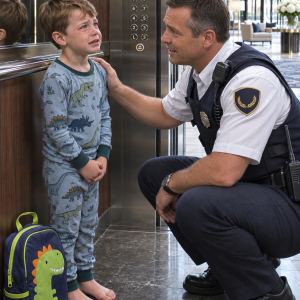
“Your Husband Is Still at the Blackjack Table.” I Was Holding My Newborn Daughter in the Hospital When a Hotel Security Guard Called From Atlantic City. My Three-Year-Old Son Had Been Alone for Five Hours, Riding the Elevator and Pressing Every Button He Could Reach. I Thought My Husband Would Leave the Table the Second He Heard Our Son Had Been Found. Then the Guard Told Me What My Husband Asked Him to Do Until Morning
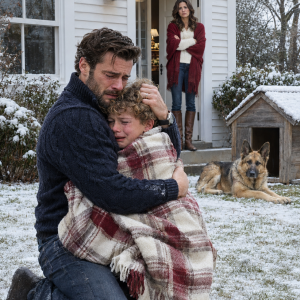
I Came Home Six Days Early and Found My Eight-Year-Old Son Curled Up in the Doghouse—My Wife Called It “Discipline,” but the Trail Camera Documented 22 Nights; Then My Son Saw One Photo and Clutched My Wrist, Terrified I’d Tell Her I Knew—And I Finally Understood Why He’d Been Too Afraid to Ask for Help
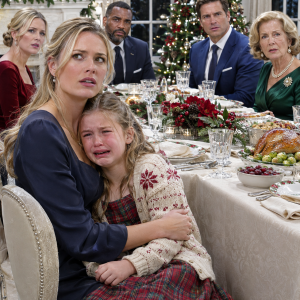
At Christmas Dinner, My Mother-in-Law Told My Nine-Year-Old Daughter She Wasn’t “Real Family” and Couldn’t Join the $30,000 Holiday Trip I’d Paid For—My Husband Looked at Me and Said, “Thanks for Understanding,” So I Canceled the Reservations by Morning…Then I Learned He’d Helped Plan Her Exclusion Days Earlier