He shook his head.
“I’m done.”
I wish I could say I felt relieved.
I didn’t.
Michael was my son.
I had taught him to ride a bicycle. I had sat beside him through childhood fevers, driven overnight to help him move into his first apartment, stood beside him at his first wedding, and held Owen in my arms on the morning he was born.
Yet while his own child had needed him, Michael had chosen fear and convenience.
That truth hurt in a way anger couldn’t repair.
So I left him sitting there and climbed into the ambulance beside my grandson.
The Question Owen Was Afraid to Ask

On the way to the hospital, Owen barely spoke.
The medic kept checking his temperature and asking simple questions while I sat beside him, holding one of his hands between mine.
Eventually he turned toward me.
“Grandpa?”
“I’m here.”
“Do I have to go back?”
I knew exactly what he meant.
Not back to the hospital.
Back to that house.
I tightened my hand around his.
“No.”
His eyes filled.
“You don’t know that yet.”
“Then I’ll make sure every person who needs to know what happened hears the truth. You’re not handling this alone anymore.”
He stared at me for several seconds.
Then he leaned against my shoulder.
For the first time since I had found him outside, his body seemed to relax.
The weeks that followed were difficult and complicated, as real life usually is after a moment that appears simple from the outside.
There were interviews, financial reviews, court hearings, medical evaluations, meetings with attorneys, and long conversations in quiet offices where Owen had to repeat things he wished he could forget.
Investigators found financial transactions connected to his trust that required further explanation. Messages on Michael’s phone showed that Rebecca had repeatedly discussed building a record that portrayed Owen as incapable of managing his future inheritance. Medical testing also raised serious questions about why he had experienced unexplained periods of extreme drowsiness.
The earlier hospital visit was reopened for review.
Michael eventually admitted that he had known more than he first claimed.
Fear had kept him quiet, he said.
Financial pressure had kept him cooperating.
Rebecca had threatened to expose irregularities connected to his business if he refused to follow her plans.
Maybe all of that was true.
But explanations are not the same thing as excuses.
I told him that once.
It was the only conversation we had for a long time.
“I was afraid of losing everything,” Michael said.
I looked at him across the small visitation table.
“You were so busy protecting everything else that you forgot who you were supposed to protect first.”
He lowered his head.
There was nothing more to say.
A Different Kind of Inheritance
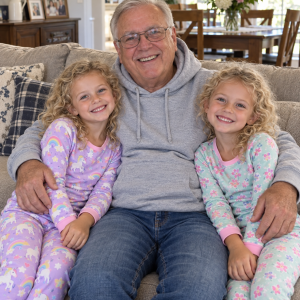
By the following summer, Owen was living with me permanently.
The legal process involving Michael and Rebecca continued for months, and both eventually faced serious consequences connected to the treatment of Owen and the financial decisions surrounding his trust. The disputed money was restored under independent supervision, and new protections were put in place so that no family member could access it without proper oversight.
But money turned out to be the least important thing Owen recovered.
When he first moved into my house, he apologized constantly.
If he left a glass beside the sink, he apologized.
If he forgot to turn off a light, he apologized.
If he dropped something, his entire body stiffened before he even looked at me.
One Saturday morning, about three months after he arrived, he accidentally knocked a bowl of pancake batter onto my kitchen floor.
The bowl bounced once and rolled beneath the table.
Owen froze.
I looked at the batter spreading across the tile.
Then I looked at him.
“Well,” I said, “I guess the floor wanted breakfast.”
He stared at me.
I handed him a towel.
“Grab the mop, kiddo.”
For a second he didn’t move.
Then he laughed.
It was a small laugh, almost uncertain, but I hadn’t heard that sound from him in a very long time.
We cleaned the kitchen together.
Nothing else happened.
Nobody shouted.
Nobody threatened him.
Nobody sent him outside.
It was just spilled pancake batter.
That morning taught me something I wish I had understood much earlier: safety isn’t always something people recognize when they finally receive it. Sometimes they have to learn it slowly, through hundreds of ordinary moments in which nothing bad follows a simple mistake.
Owen is seventeen now.
He has friends over on weekends, plays guitar badly but enthusiastically, and has started talking about studying environmental engineering after high school. His grades have improved, but I care far more about the fact that he leaves his bedroom door open now.
There was a time when he always closed it.
These days, when I sit on the porch with my coffee, I sometimes watch him and his friends around the old wooden table near the garden, arguing about music or college or whose turn it is to drive into town for pizza.
On those afternoons, the house feels noisy.
Shoes pile up near the door.
Someone inevitably leaves an empty glass on the counter.
The refrigerator opens twenty times an hour.
I wouldn’t change any of it.
One evening near the end of summer, Owen sat beside me on the porch while the sun disappeared behind the foothills.
After a while he said, “Grandpa, can I ask you something?”
“Always.”
He looked across the yard.
“Why did you believe me?”
The question caught me off guard.
“What do you mean?”
“That first night. Everybody else had explanations for everything. Rebecca always made things sound reasonable. Dad always said there were two sides. But you believed me.”
I thought about that for a long moment.
Then I told him the truth.
“I didn’t know every detail yet. But I knew what I saw.”
He waited.
“I saw my grandson standing barefoot outside in freezing weather while the adults responsible for him were sitting comfortably inside. I didn’t need the rest of the story before deciding you deserved to be safe.”
Owen nodded slowly.
A few minutes later, his friends arrived, and he ran down the steps to meet them.
I stayed in my chair and watched them disappear around the side of the house, laughing about something I couldn’t hear.
For most of my career, I believed evidence was valuable because it helped us understand what had already happened.
I’m not sure I believe that anymore.
Sometimes evidence gives someone permission to tell the truth.
Sometimes the truth opens a door.
And sometimes, if you’re fortunate enough to arrive at the right moment, that door leads a frightened kid away from a cold driveway and toward a home where he finally understands that spilling something on the floor is just spilling something on the floor.
Nothing more.
That winter night, I thought I was rescuing my grandson from the cold.
It took me much longer to understand that the real work began afterward, in the quiet months when we taught each other what family was supposed to feel like.
Not perfect.
Not spotless.
Not impressive from the street.
Just warm enough that nobody has to wonder whether they are allowed to come inside.