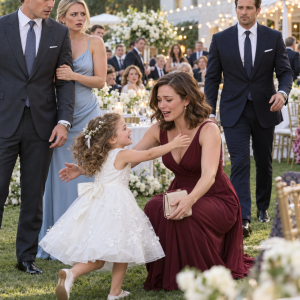
I didn’t answer.
Instead, I met with my attorney, Rebecca Sloan, and explained everything that had happened.
She listened carefully and began reviewing the financial arrangements I had established after Caroline’s passing.
What we discovered over the following weeks was deeply troubling.
Large amounts intended for household and medical expenses had been transferred into accounts unrelated to Maisie’s care.
Some had funded Preston’s business ventures.
Others had paid for vacations, luxury purchases, and wedding expenses.
The records also showed that payments meant for certain services had not always reached the intended providers.
Rebecca arranged an independent financial review.
“Meredith, we need to separate two issues,” she explained. “One is the money. The other is Maisie’s welfare. We need clear evidence for both.”
I agreed.
I didn’t want revenge.
I wanted my granddaughter safe.
During the court proceedings, the nanny provided a detailed account of Maisie’s daily routine, including occasions when the little girl had been excluded from family activities.
Medical professionals also explained the importance of a stable, supportive environment during her recovery.
The court reviewed the circumstances surrounding the wedding incident alongside the broader evidence.
Eventually, an interim arrangement allowed Maisie to live with me while the case continued.
When I brought her home, she stood in the doorway of the bedroom I had prepared.
There were soft blue curtains, a bookshelf, stuffed animals, and a window overlooking the garden.
“Is this really my room?” she asked.
“It certainly is.”
“Can I put my drawings on the wall?”
I smiled.
“You can cover the whole wall if you want.”
She laughed.
It was the first completely carefree laugh I had heard from her in months.
The Life Her Father Could No Longer Hide
The financial investigation continued for four months.
During that time, Preston’s circumstances changed dramatically.
Several accounts were temporarily restricted while investigators reviewed the transactions. His business relationships deteriorated, and investors began distancing themselves from him.
The expensive house he had once proudly shown to friends became another source of financial uncertainty.
Brielle moved out less than a month after the wedding.
Through her attorney, she sent a message expressing regret and asking whether she could apologize to Maisie.
I declined direct contact while the court’s restrictions remained in place.
Maisie was finally beginning to feel secure, and I would not allow anyone to disrupt her recovery simply because they wanted to feel better about their choices.
At home, our days became wonderfully ordinary.
We ate breakfast together.
We watered the flowers.
We attended her medical appointments and celebrated every encouraging update.
Maisie also began working with a child therapist who helped her understand that she had done nothing wrong.
One afternoon, while drawing at the kitchen table, she asked me something unexpected.
“Grandma, if I laugh really loud, will someone get mad?”
I put down my coffee.
“Not in this house, sweetheart.”
“Even if we have visitors?”
“Especially when we have visitors.”
She thought about that for a moment.
Then she laughed as loudly as she could.
I laughed with her until both of us had tears in our eyes.
The Day Maisie Stopped Hiding
Several months later, Maisie’s hair had begun growing back in soft, uneven curls.
One morning, she stood in front of her bedroom mirror holding the lavender scarf.
“Grandma, do I have to wear this today?”
“Only if you want to.”
She studied her reflection.
Then she carefully placed the scarf on her dresser.
“I think I want people to see my hair.”
I smiled.
“Then that’s exactly what they’ll see.”
That afternoon, we attended a small gathering at a community garden supported by my foundation.
There were families, volunteers, and several children who had also experienced long periods of medical treatment.
Maisie played with two girls near the flower beds.
When someone offered to take a group photograph, she ran toward the camera without hesitation.
She didn’t ask whether her hair looked right.
She didn’t search for someone else’s approval.
She simply smiled.
Later, she came running toward me with a photograph in her hand.
“Grandma, look! I’m right in the middle!”
I studied the picture.
There she was, standing between her new friends, grinning with complete confidence.
“That’s exactly where you belong,” I told her.
She hugged me, then ran back to play.
Watching her disappear into the sunshine, I finally understood what my daughter had wanted me to promise all those years earlier.
Caroline hadn’t asked me to preserve a particular house, maintain someone’s lifestyle, or keep a family together at any cost.
She had asked me to protect her child.
For years, I had confused generosity with protection.
I thought that if I provided enough money, solved enough problems, and avoided enough disagreements, Maisie would have the life she deserved.
But children need more than comfortable houses and expensive celebrations.
They need adults who notice when they are missing.
They need someone who will listen when they are frightened.
And most importantly, they need to know that love is never something they must earn by looking perfect.
That evening, Maisie fell asleep with her photograph beside her pillow.
I stood in her doorway for a long moment, listening to the quiet sounds of a peaceful home.
Then I whispered the words I wished Caroline could hear.
“She’s safe, sweetheart. And she’s finally learning how loved she is.”
Ten Lessons About Love, Family, and Protecting Children
1. A child should never have to change their appearance, hide their feelings, or pretend to be someone else simply to earn a place in the family that is supposed to love them unconditionally.
2. True generosity is not measured by how much money we give, but by whether our kindness genuinely improves the lives of the people who depend on us.
3. Sometimes the most loving decision we can make is to establish firm boundaries with someone we once trusted, especially when their choices begin affecting an innocent child.
4. A beautiful home, an expensive celebration, and a carefully maintained public image mean very little when the people living behind those polished doors do not feel respected or valued.
5. Children often remember the smallest moments of kindness for the rest of their lives, because being heard, believed, and comforted can matter more than any material gift.
6. When someone repeatedly dismisses another person’s feelings, we should pay attention to their actions rather than accepting comforting explanations that never lead to meaningful change.
7. Protecting a child’s emotional well-being sometimes requires difficult conversations, uncomfortable decisions, and the courage to challenge people we once believed would always do the right thing.
8. No illness, physical difference, or temporary change in appearance can diminish a person’s worth, and every child deserves to grow up surrounded by people who remind them of that truth.
9. Family loyalty should never mean remaining silent when something is wrong, because genuine love requires accountability, honesty, and a willingness to put vulnerable people first.
10. The greatest legacy we can leave the next generation is not wealth, status, or a perfect family photograph, but the lasting certainty that they are worthy of love exactly as they are.