Part Three: What the Bride Never Knew

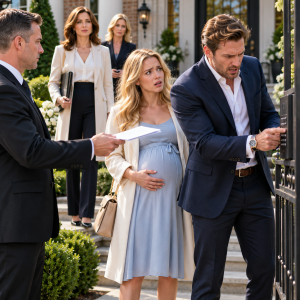
The envelope contained a copy of an event agreement and a letter from my attorney, documents that had become necessary after several troubling conversations with Caroline’s family.
During the previous summer, her father, Lawrence Prescott, had repeatedly assured everyone that he was financing the wedding, although I had learned from the hotel’s management that his initial payment had never cleared.
Andrew had called me one evening, embarrassed and worried that the entire celebration might be canceled.
I quietly arranged to cover the outstanding balance, asking only that my involvement remain private.
What Caroline did not know was that Hawthorne House had recently become part of a hospitality company in which I held the controlling interest.
The acquisition had been negotiated long before Andrew announced his engagement, and I had never considered it particularly important to mention my business affairs to his future wife.
I had also learned that Lawrence’s struggling property consultancy owed a substantial amount to one of our investment partnerships, although I had kept those business matters entirely separate from the wedding.
Standing beside Eleanor, I turned toward Caroline.
“Your father didn’t pay for this reception,” I said.
She frowned.
“Excuse me?”
“When the original payment failed, Andrew asked for help. I covered the remaining expenses because I wanted him and you to have a beautiful day.”
Caroline gave a dismissive little shrug.
“Well, congratulations. You helped your son. That’s what parents do.”
“You’re right,” I answered. “And another thing parents do is teach their children that kindness matters more than money.”
She crossed her arms.
“I really don’t have time for a lecture.”
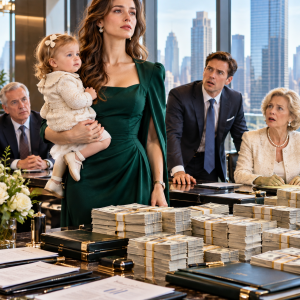
“Then I’ll keep this brief. The company that operates this hotel belongs to a business group I control, and the agreement for tonight’s event includes a provision allowing management to end a function when guests are subjected to serious harassment.”
Her expression changed.
“You’re saying you own this place?”
“I’m saying that the people who work here have an obligation to protect their guests, including my wife, and that the celebration cannot continue as though nothing happened.”
At the nearest table, Lawrence Prescott slowly rose from his chair.
He was a man who enjoyed introducing himself by mentioning influential acquaintances, and I could see him searching his memory for the name of the holding company that had recently acquired several waterfront properties.
“Walter,” he called, approaching the platform, “surely we can settle this privately.”
“I would have preferred that,” I replied. “Unfortunately, your daughter chose to make it public.”
Caroline turned toward her father.
“Dad, what is he talking about?”
Lawrence did not answer immediately.
Instead, he looked toward the envelope in my hand, then toward the hotel manager standing near the entrance.
“I believe Mr. Ellison has some considerable business interests here,” he finally admitted.
Caroline stared at me as though I had suddenly become someone entirely different.
That look troubled me more than I expected, because it suggested that she was reconsidering her behavior only after discovering that I possessed something she respected.
I would have forgiven an awkward comment, a thoughtless remark, or even an apology offered too late, but I could not overlook the possibility that she believed ordinary people deserved less consideration than wealthy ones.
“Would you have spoken to Eleanor differently if you’d known what I owned?” I asked.
Caroline hesitated.
“That’s not fair.”
“It’s a simple question.”
She looked away.
Beside me, Eleanor shifted her weight, and I realized that the effort of remaining on the platform was becoming too much for her.
I asked a member of the staff to bring a chair, then helped my wife sit before turning back toward the room.
What happened next was not something I had planned, and it would matter far more than anything written in the documents I carried.
Andrew stood up.
Part Four: The Choice My Son Had to Make
My son approached the platform slowly, his face pale and his shoulders tense, looking less like a newly married man than the little boy who used to come home from school after making a mistake he was afraid to explain.
For several moments, he said nothing.
Then he knelt beside Eleanor’s chair.
“Mom, I’m sorry,” he whispered.
She touched his cheek.
“Oh, honey, this isn’t your fault.”
He shook his head.
“I should have said something the moment it happened. I heard every word, and I just sat there.”
Eleanor’s eyes filled with tears.
“You don’t have to fix everything for me, Andrew.”
“I know,” he replied. “But I should never have let you stand there alone.”
Watching them, I felt something inside me loosen, because although I had spent much of the evening thinking about how to protect my wife, I understood that Andrew needed to discover his own courage rather than borrow mine.
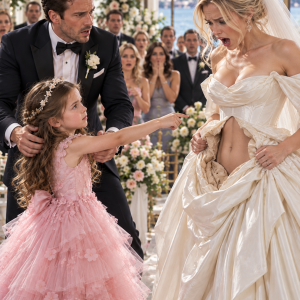
Caroline stepped forward.
“Andrew, are you seriously taking their side over one embarrassing joke?”
He rose to face her.
“It’s not just tonight, Caroline.”
She blinked.
“What does that mean?”
“It means I’ve spent months explaining away the things you say about people. The way you talk to waiters, the comments about my friends, the way you treat my parents whenever you think they can’t hear you.”
His voice trembled, but he continued.
“I kept telling myself you were stressed, or that you didn’t mean it, because I loved you and wanted us to work. But tonight my mother came here when she could barely manage the stairs, and you made her feel ashamed of something she can’t control.”
Caroline’s eyes began to fill.
“Andrew, please. We just got married.”
“I know.”
“You can’t throw everything away because of one bad moment.”
He looked at her with an expression I had never seen before, a mixture of sadness and clarity.
“I’m not throwing it away because of one moment. I’m finally admitting what all the other moments meant.”