Part One: The Woman in the Ivory Dress

The morning of my daughter’s christening, I stood beneath the stained-glass windows of a small Episcopal church in Newport, Rhode Island, holding my eight-week-old baby while my husband welcomed another woman with a tenderness I had not received from him in months.
Her name was Caroline Pierce, and she wore an elegant ivory dress with pearl buttons, a matching coat draped over one arm, and the confident expression of someone who had been assured that she belonged exactly where she was standing.
My husband, Nathaniel Ashford, placed his hand against her back as he introduced her to our relatives, and although he quickly withdrew it when he noticed me watching, I had already seen enough to recognize the intimacy between them.
Our daughter, Emma Rose, slept peacefully against my shoulder, unaware that the family gathering meant to celebrate her arrival had become something entirely different.
Nathaniel’s mother, Margaret, approached us with her customary smile, the one she reserved for occasions when she intended to give an order without appearing impolite.
“Elizabeth, sweetheart, Caroline is practically family, and I thought it would be lovely to include her in the photographs.”
I looked at the woman standing beside my husband, then at Margaret, who had spent the previous nine years reminding me that marrying into the Ashford family required discretion, gratitude, and an understanding of appearances.
“I’m sure you did,” I replied.
Margaret seemed pleased by my calm response, although she had misunderstood it entirely, just as she had misunderstood nearly everything about me since the day Nathaniel brought me home to meet his parents.
What none of them knew was that I had discovered the relationship six weeks earlier, during one of those lonely nights when a new mother measures time by feedings rather than hours.
Nathaniel had fallen asleep while his phone rested beside the nursery rocking chair, and when a message appeared on the screen, I recognized Caroline’s name from several charity events.
The message itself was affectionate enough to leave little room for misunderstanding, but what troubled me more was the conversation I found afterward, particularly Nathaniel’s assurance that his mother was helping him arrange everything.
They had discussed introducing Caroline as Emma’s honorary godmother, gradually making her presence familiar to our friends, and eventually presenting the change in Nathaniel’s personal life as something everyone had accepted naturally.
One message from Margaret had stayed with me longer than the others.
Elizabeth won’t cause a scene. She never does.
I had spent years avoiding disagreements because I believed a peaceful marriage required compromise, and somehow that willingness had become evidence, in their minds, that I would tolerate anything.
Rather than confront Nathaniel that night, I photographed the relevant messages, saved copies of financial records, and called an attorney named Rebecca Foster, an old college friend who now handled complicated family and estate disputes in Boston.
Rebecca listened without interrupting, then asked questions that seemed strangely unrelated to my husband’s relationship.
She wanted to know about our property, the charitable foundation established by my grandparents, the family trust I had inherited, and the agreement Nathaniel’s attorneys had presented shortly before our wedding.
Within two weeks, we discovered that the Ashford family’s impressive wealth concealed considerable financial difficulties, including heavily financed properties and obligations connected to their charitable organization.
More importantly, we discovered that the church where Emma would be christened occupied land owned by the Hawthorne Heritage Trust, a charitable institution my grandmother had established decades earlier.
I was its principal trustee.
Margaret had spent years hosting fundraisers in that church, speaking proudly about its community programs while rarely acknowledging the family responsible for preserving the property.
I had never considered that omission particularly important.
Now I understood why it mattered.
When the christening ceremony ended, Margaret summoned the photographer and began arranging relatives near the altar, placing Nathaniel beside Caroline while suggesting that I stand slightly to the side with Emma.
“We want everyone who loves this little girl in the picture,” she announced.
Nathaniel leaned toward me, his smile remaining perfectly arranged for the guests.
“Please don’t make this difficult, Elizabeth. It’s one photograph.”
I adjusted Emma’s blanket and looked toward Reverend Samuel Porter, who had known my grandmother for almost thirty years.
“Reverend Porter, before we take the photographs, may I clarify something about the church and the trust that maintains it?”
The room became noticeably quieter.
I explained, calmly and without mentioning the private messages, that the Hawthorne Heritage Trust remained responsible for the property and its charitable facilities, and that any official use of the church’s name or images required appropriate authorization.
Then I turned toward my husband.
“I won’t have our daughter’s christening photographs used to suggest that Caroline has a place in our marriage or in decisions about Emma’s future.”
Nathaniel’s expression changed immediately, while Margaret looked from me to the reverend as though waiting for him to correct my misunderstanding.
He did not.
“Elizabeth is correct about the trust’s responsibilities,” he said gently.
Caroline lowered her eyes, and for the first time that morning, she seemed uncertain about the arrangement she had agreed to participate in.
Nathaniel reached for my wrist.
“We need to discuss this privately.”
I stepped away, keeping Emma close.
“We will, through our attorneys.”
At that moment, Rebecca entered through the side aisle carrying a leather folder, having waited until the ceremony concluded before approaching us.
She introduced herself to Nathaniel and handed him the formal notice of the divorce proceedings I had initiated.
For several seconds, he simply stared at the documents, apparently unable to reconcile the woman he thought he knew with the one standing before him.
Then Caroline whispered something that changed the direction of everything that followed.
“Nathaniel, I told you she would eventually find out about the arrangement.”
Margaret turned toward her so quickly that the pearls at her throat shifted.
“Caroline, that’s enough.”
But Rebecca had heard her, and so had I.
Until that moment, I had believed I was uncovering the end of a marriage.
I was beginning to understand that my marriage might have been part of a much older plan.
Part Two: The Agreement Nobody Mentioned
We moved into the church’s small conference room, where Nathaniel accused me of embarrassing his family while Margaret insisted that my exhaustion following Emma’s arrival had affected my judgment.
Related Posts

“Mom, I Sold My $1,200 Guitar to Buy Elena a Wheelchair. Please Don’t Be Mad,” My 13-Year-Old Son Whispered, Hiding His Injured Arm Behind His Back. I Thought He’d Simply Made a Heartbreaking Sacrifice for a Disabled Classmate—Until Two Police Officers Knocked on Our Door the Next Morning. One Held Up a Clear Evidence Bag Containing a Twisted Piece of Metal. My Son Went Pale. Then the Officer Asked, “Ma’am, Have You Seen the Security Footage From Tuesday?”

Five Years After Our Divorce, My Wealthy Ex Still Thought I Had Left Him With Nothing—Until Three 4-Year-Old Girls Ran Into My Arms at the Airport Calling “Mommy.” He Looked at Their Faces, Asked Their Ages, and Began Counting Backward… But the Secret Hidden in His Own Family Went Much Deeper Than Either of Us Knew
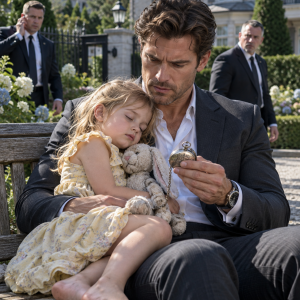
A Barefoot 3-Year-Old Somehow Passed Every Guard at Nathaniel Whitmore’s Estate and Fell Asleep in His Arms—But When Her Worn Stuffed Rabbit Revealed His Father’s Missing Watch and a 23-Year-Old Message, Nathaniel Realized the Graves He Had Visited Since He Was Seventeen Might Be Hiding the Wrong Story
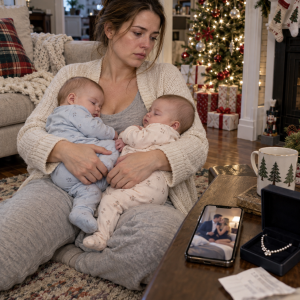
“She’ll Never Leave Me. She Has No Money and Two Babies,” My Husband Told His Mistress—Then at 11:47 on Christmas Eve, He Accidentally Sent Me Their Hotel-Bed Photo While Our 6-Month-Old Son Had a Fever… By Sunrise, He Was About to Discover What My Grandmother Had Quietly Protected From Him for Years