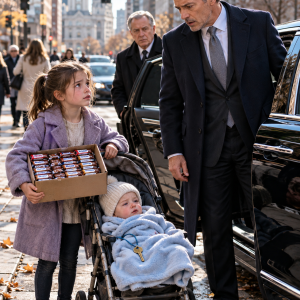
That request ended any discussion about who would accompany her to the hospital.
What the House Remembered

At Maine Medical Center in Portland, doctors found that Lily was severely dehydrated, undernourished, and suffering from a respiratory infection that should have been treated much earlier. Tests also indicated repeated exposure to strong sedating medication over a period of weeks.
A pediatric specialist sat beside her bed and asked gentle questions, never moving closer without permission.
“Do you know who gave you the medicine?”
Lily looked toward Evelyn before answering.
“Vanessa usually did. Dad held my arms when I moved too much.”
Bradley and Vanessa were taken into custody before sunrise.
The following morning, investigators searched their home. In a locked bathroom cabinet, they discovered unprescribed medication, used medical supplies, and a notebook in which Vanessa had recorded doses, sleeping hours, and Lily’s behavior during family visits. Bradley’s computer contained a falsified medical record claiming the child had passed away at home under a physician’s care.
The physician named in the document had never met Lily.
Investigators also learned that Bradley had paid a struggling funeral director in cash, requested an immediate private arrangement, and insisted that no additional examination be performed. He had presented himself as a grieving father with religious objections to ordinary procedures, and no one had asked enough questions.
Vanessa’s phone revealed why the couple had been in such a hurry. In messages to her sister, she complained that Lily’s health and emotional needs prevented the family from having the polished life she wanted. She wrote constantly about three-year-old Mason, her biological son with Bradley, and described him as the child who deserved their full attention.
After Mason’s arrival, Lily had slowly disappeared from family photographs. Visits with Evelyn were canceled. Phone calls went unanswered. Bradley repeatedly claimed Lily was sleeping, resting, or too anxious to see anyone.
Evelyn remembered the excuses, and each one returned with a new and painful meaning.
Detective Hannah Porter met with her at the hospital and placed photographs of the casket, the restraints, and the hidden key on a table.
“I need to ask you something difficult,” the detective said. “Do you believe your son knew Lily was still breathing?”
Evelyn thought of Bradley telling her to put the child back. She thought of Vanessa’s words in the hallway and the service planned before any relative could examine the circumstances.
“Yes,” she answered. “I believe he knew.”
The detective nodded.
“So do we.”
A recovered security recording later showed Bradley carrying an unresponsive Lily into the living room while Vanessa followed with the small key in her hand. Near the end of the recording, Bradley could be heard saying that once the burial was completed, no one would be able to question their story.
The camera could not show what was in his heart, but it showed his choices clearly.
The Son Behind the Glass
Lily remained in the hospital for three weeks. She startled whenever a curtain closed around her bed, grew anxious when a nurse brought medical equipment into the room, and hid crackers beneath her pillow because she did not trust that another meal would come.
The child psychologist explained that the casket had not been the beginning of Lily’s suffering. It was the final step in a long pattern of isolation, fear, neglect, and forced silence.
Evelyn sat beside her granddaughter each day, reading stories without demanding that Lily listen. Sometimes she talked about ordinary things—the first frost, a stubborn squirrel raiding the bird feeder, the cinnamon rolls she planned to bake when they went home. She wanted Lily to hear the steady rhythm of a world in which tomorrow could be expected.
Mason was temporarily placed with a licensed foster family while social workers considered a permanent arrangement.
Lily asked about him almost immediately.
“Is he safe?”
“Yes,” Evelyn assured her. “Good people are taking care of him.”
“He didn’t do anything wrong.”
Even after everything she had endured, Lily did not blame her little brother. She had often brought him water, gathered his toys, and hummed beside his bed when the adults were unavailable.
Several days later, Bradley requested a meeting with Evelyn at the county detention center. She refused twice, then finally agreed, hoping she might hear some sign of responsibility.
They sat on opposite sides of thick glass.
Bradley looked tired, but his first question was not about Lily’s recovery.
“Mom, you have to tell the investigators that Vanessa controlled everything.”
Evelyn held the telephone receiver without answering.
“I made mistakes,” he continued. “But I was afraid we would lose Mason. Vanessa said Lily wasn’t going to wake up again.”
“She was breathing, Bradley.”
“I panicked.”
“You arranged a burial instead of calling for medical help.”
He lowered his eyes.
“If you testify that I was a good father before all this, it could help me.”
That was the moment Evelyn stopped waiting for an apology. He had not asked whether Lily could breathe comfortably, whether she was eating, or whether she still woke in fear. He was thinking only about the consequences that had finally reached him.
“I will tell the truth,” Evelyn said.
“I’m your son.”
“And Lily is a child you were supposed to protect.”
His face tightened.