Every instinct told him to break those doors immediately, but experience forced him to choose evidence capable of destroying the entire network.
Part 3: The Ledger of Vanishing Lives

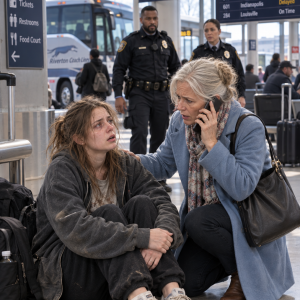
Marcus met them before dawn at a secure federal residence outside Worcester. When Tessa stepped from Walter’s vehicle, the veteran agent who had confronted organized-crime figures without visible fear collapsed against his daughter and wept. Federal physicians documented that both women had received prolonged doses of powerful sedatives without legitimate medical justification, while Tessa’s examination confirmed seventeen days of unlawful confinement.
Olivia’s injuries enraged Walter, yet the possibility of additional prisoners demanded disciplined patience. Marcus began assembling prosecutors, forensic accountants, and a tactical rescue team, while Walter reviewed the evidence captured inside Hawthorne House.
The recordings established conspiracy and attempted financial exploitation, but prosecutors needed records connecting the facility to earlier victims and affiliated institutions. A direct raid might rescue the current patients while leaving the broader organization untouched, particularly if remote servers automatically erased incriminating transactions.
Walter therefore volunteered to return before anyone noticed the escape. Marcus strongly objected, although he finally agreed after equipping Walter with an encrypted transmitter and promising extraction at the first indication of danger.
During the early morning shift change, Walter entered the administrative wing disguised as a contractor responding to a fabricated electrical alert. Inside a restricted records office, he discovered standardized competency evaluations bearing different patient names but identical grammatical mistakes. Every file included guardianship petitions, property valuations, insurance policies, and instructions for routing liquidated assets through corporations registered in Nevada and Delaware.
A black binder labeled “Completed Discharges” contained nineteen cases whose final entries followed the same sequence: involuntary commitment, judicial incapacity declaration, asset transfer, and death from supposed cardiac complications. Some victims had died within forty-eight hours after their property changed ownership.
Naomi Cruz, a registered nurse working the overnight rotation, entered while Walter photographed the binder. Instead of activating the alarm, she locked the door behind herself and removed a small encrypted drive from beneath her identification badge.
“I have copied authentic medication logs and security footage for three years,” Naomi whispered. “They threatened my teenage son whenever I tried contacting regulators.”
The drive contained altered prescriptions, forged physicians’ signatures, internal payment records, and a list of twelve associated facilities operating across Massachusetts, New York, Pennsylvania, Florida, and California. Naomi had also preserved footage showing staff members transporting unconscious patients between states whenever relatives demanded outside examinations.
Walter transmitted the files to Marcus before leaving through the loading area. By sunrise, federal analysts had connected Hawthorne House to shell companies, corrupt evaluators, compromised health inspectors, and lawyers who specialized in emergency guardianship petitions.
While reviewing Catherine’s trust agreement, an attorney uncovered a safeguard that Walter’s late wife had quietly inserted shortly before her death. If Olivia were declared incapacitated under circumstances suggesting coercion or fraud, administrative authority would transfer automatically to Walter instead of her husband.
Catherine had apparently distrusted Preston long before Walter recognized the danger. Her foresight had prevented the conspirators from accessing the twenty-five-million-dollar trust, which explained their escalating pressure upon Olivia.
Walter pressed his fingers against Catherine’s signature while grief and gratitude moved through him together. Even after death, she had placed herself between their daughter and someone determined to destroy her.
Part 4: The Daughters Become the Bait
Preston called Walter shortly after nine o’clock, performing panic with impressive professional precision. He claimed that Olivia had fled Hawthorne House during a delusional episode and might harm herself unless Walter disclosed any recent communication.
Walter adopted the frightened confusion of an aging father who trusted his accomplished son-in-law.
“You promised she was safe, so how could a heavily supervised patient simply disappear?” Walter demanded. “If Olivia contacts me, I will convince her to return.”
After the conversation ended, Olivia proposed an operation that neither father wanted to approve. She and Tessa would telephone their husbands, pretend that withdrawal symptoms had left them terrified, and offer to sign the disputed documents in exchange for returning home afterward.
“Preston believes medication has made me helpless, which means he will underestimate me again,” Olivia argued. “We need him explaining the entire plan where federal agents can hear everything.”
Marcus objected that Tessa had already endured enough, but she refused to remain protected while other captives awaited rescue.
“Jared delivered me to those rooms, so let him believe he still controls the ending,” she answered. “I want my voice helping open every locked door.”
Federal prosecutors authorized the controlled operation after both women underwent medical evaluation and received concealed transmitters. Meanwhile, technicians isolated the facility’s communications network to prevent remote destruction of evidence.
Olivia called Preston from a roadside motel near Hawthorne House, crying convincingly while claiming she had become confused after escaping. Tessa contacted Jared moments later and repeated the same arrangement. Their husbands agreed to meet them inside the facility, where Diane, Doctor Lowell, and a corrupt state health inspector would prepare emergency documents.
Shortly before sunset, the women entered through the main doors while tactical teams waited throughout the surrounding forest. Walter listened from a mobile command vehicle as Preston guided Olivia into the administrative conference room.
“Once I sign everything, you will take me home and stop giving me injections, correct?” Olivia asked.
Preston laughed quietly before explaining that she would never return to Brookline. After the trust transferred, Doctor Lowell intended to administer a lethal combination of medications and record her death as an accidental overdose associated with prenatal psychosis.
In the neighboring office, Jared told Tessa that her father’s investigation would end after receiving a fabricated suicide message. Diane then ordered an employee to begin deleting the patient database.
Federal technicians blocked the command, but the failed deletion triggered a silent security protocol that sealed every electronic door inside the building. Warning lights flashed throughout the command vehicle as Olivia’s transmitter carried the sound of Preston overturning furniture.
“Your father arranged this, and you will die before he reaches the room,” Preston shouted.
The transmission dissolved into static before Walter could hear Olivia’s response.
Part 5: The Underground Route

Tactical commanders needed several minutes to breach the reinforced entrances, but Walter remembered a steam-maintenance tunnel shown on the original architectural plans. He entered beneath the eastern foundation with two agents following closely, then crawled through suffocating heat toward the central utility chamber.
Beyond the final service panel, terrified patients were pounding against locked doors while staff members attempted to destroy paper records. Walter directed the agents toward the residential wing and continued toward the server room, where Olivia’s transmitter had last produced a signal.
He entered the room and found Preston holding a hunting knife against Olivia’s throat. Doctor Lowell stood beside a computer terminal, desperately entering commands that the federal technicians had already disabled.