Part 1 — When The Sleeping Heir Spoke
“Do Not Trust Carter.”
The words were so faint that I first thought the old house had made them. Wind moved against the windows of Prescott House, pushing winter rain across the glass, and the medical monitors beside Nolan Prescott’s bed continued their soft, steady rhythm as if nothing impossible had happened.
Then his fingers tightened around mine.
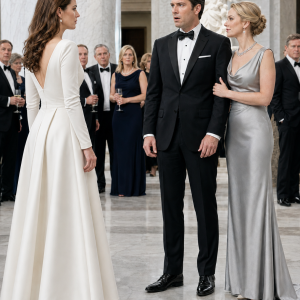
Nolan had been my husband for less than twelve hours. He had also been unconscious for nearly eight months, lying in a private medical suite inside his grandmother’s Hudson Valley estate while lawyers, doctors, trustees, and relatives spoke about him as though his silence had become a permanent legal condition. That morning, in a chapel filled with white roses and expensive restraint, I had married him because my father’s debts were crushing us, because the Prescott family needed a wife named before Nolan’s thirtieth birthday, and because I had been told the arrangement was a private act of mercy for a dying man.
Now the dying man had opened his eyes and warned me about his cousin.
“Nolan?” I whispered, leaning closer.
His lashes trembled. His gaze moved toward me with difficulty, but there was recognition in it, not confusion. A weak sound left his throat, and the heart monitor began to quicken.
I reached for the call button, but his hand held my wrist with surprising intention.
“Wait,” he breathed.
“You Need A Doctor.”
“Not Carter.”
Every word seemed to cost him something. His face was pale, thinner than the wedding portrait displayed downstairs, but his eyes carried a desperate clarity that made fear rise through me.
“I Will Not Call Carter,” I promised. “But I Am Calling The Nurse.”
His grip loosened. Just before his eyes closed again, he whispered one more word.
“Mara.”
My name.
No one had introduced us while he was awake. No one in that room had said my name aloud except me, hours earlier, when I had sat beside him after the ceremony and told an unconscious stranger that I was sorry both our lives had become paperwork.
The alarm on the monitor sharpened. I pressed the button and shouted for help. Nurse Dana Ellis rushed in first, followed by two medical aides and Dr. Arjun Singh, the neurologist hired by the family to supervise Nolan’s recovery without sending him back to the hospital.
“He Opened His Eyes,” I said quickly. “He Spoke To Me.”
Dana checked his pulse, then bent over him. “Mr. Prescott, Can You Hear Me?”
There was no answer.
Dr. Singh examined his pupils, his reflexes, and the monitor readings. His professional calm did not erase the fact that his hands moved faster than before.
“Exactly What Did He Say?” he asked.
I hesitated. Nolan’s warning had not sounded like delirium. It had sounded like the one message he had spent eight months trying to deliver.
“He Said My Name,” I answered. “Then He Lost Consciousness Again.”
Dana looked at me for half a second too long. Before she could speak, the bedroom door opened and Evelyn Prescott entered without knocking. She was eighty-one, elegant, silver-haired, and still powerful enough to make every employee in the house stand straighter. Carter Prescott followed two steps behind her, handsome, polished, and far too interested in my face.
“What Happened?” Evelyn asked.
“Nolan Opened His Eyes,” I said.
Carter’s expression shifted so quickly that I might have missed it if I had not been watching him. Concern appeared afterward, smooth and practiced.
“Did He Speak?”
I remembered Nolan’s fingers around my wrist.
“He Made A Sound,” I said. “It Happened Too Fast To Be Certain.”
Carter stepped toward the bed. “We Should Move Him Back To The Neurological Center Immediately.”
“No,” Evelyn said.
Everyone turned to her. Dr. Singh spoke gently. “Mrs. Prescott, A Hospital Can Provide More Comprehensive Monitoring.”
“And A Hospital Can Provide Reporters, Board Members, And Opportunists Before Dinner,” she replied. “Bring What You Need Here.”
Carter placed a hand on her shoulder. “Grandmother, We Can Control The Story.”
She shrugged him off. “You Have Never Controlled A Story As Well As You Think.”
For the first time, Carter’s smile did not reach his eyes.
Evelyn looked at me. “What Did My Grandson Say?”
The room seemed to narrow.
“He Said My Name.”
“Nothing Else?”
I could feel Carter watching me.
“Nothing Clear.”
Evelyn held my gaze long enough for the lie to feel like walking barefoot across ice. Then she turned toward the others.
“Everyone Out Except Dr. Singh, Dana, And Mara.”
Carter’s jaw tightened. “Why Her?”
Evelyn did not look away from Nolan.
“Because He Woke When She Was Speaking.”
Part 2 — The House That Listened
For two hours, Nolan did not open his eyes again. Dr. Singh adjusted medication, Dana recorded neurological responses, and Evelyn stood near the fireplace with both hands clasped so tightly that her knuckles showed white beneath the diamonds. When the doctor finally left us with instructions to keep Nolan calm, the room became too quiet.
Evelyn turned toward me.
“You Lied.”
It was not a question.
I could have denied it, but exhaustion made honesty feel almost luxurious.
“He Told Me Not To Trust Carter.”
Evelyn did not react, which frightened me more than surprise would have.
“You Believe Him?” I asked.
“I Believe Nolan Spoke.”
“That Is Not The Same Answer.”
She looked toward the dark river beyond the windows. “People Emerging From Long Unconsciousness Can Be Disoriented.”
“He Knew My Name.”
“You Spoke To Him Earlier.”
“I Spoke To A Man Everyone Told Me Could Not Hear Me.”
Her shoulders lowered slightly, and for the first time she looked like a grandmother instead of an institution.
“Carter And Nolan Were Never Close,” she said.
“Not Being Close Is Different From Using Your First Words In Eight Months To Warn A New Wife.”
Her expression hardened again. “Your Responsibility Is Not To Investigate This Family. Your Responsibility Is To Help Nolan Recover.”
“My Responsibility?”
“You Signed The Agreement.”
The words struck a bruise I had been ignoring all day. My father had signed most of the negotiations before I was allowed to see the final documents. I had signed them too, yes, because debt makes choices smaller, but I had not understood what I was entering.
“I Chose This,” I said. “But I Will Not Be Treated Like Furniture Purchased For Nolan’s Room.”
Something in Evelyn’s eyes shifted, perhaps irritation, perhaps reluctant respect.
“Your Father Described You As Practical, Loyal, Unmarried, And Unlikely To Cause Trouble.”
A bitter laugh escaped me. “And You Believed Him?”
“I Believed You Were Desperate.”
That hurt less than pity because it was true.
After Evelyn left, Dana brought me soup, bread, and a blanket. She checked Nolan’s medication with the caution of someone who knew the house watched more than it admitted.
“How Long Have You Cared For Him?” I asked.
“Six Months.”
“So You Were Not Here When The Accident Happened.”
“No.”
“Who Was?”
Her hands paused over the IV line.
“Another Nurse.”
“Why Did She Leave?”
Dana lowered her voice. “This House Notices Questions.”
“What Does That Mean?”
“It Means People Survive Here By Knowing Which Answers Belong To Them.”
I looked at Nolan. “Do You Think He Has Been Hearing People?”
Dana’s eyes moved toward the door. “I Think His Heart Rate Changed Around Certain Voices.”
“Whose?”
She hesitated.

“Mine Today?”
“Yes.”
“Carter’s?”
Dana did not answer, which was answer enough.
Near midnight, Carter entered with two cups of tea. He looked younger without the easy smile he had worn at the wedding, though not less dangerous.
“I Thought You Might Need This,” he said.
“I Do Not Take Drinks From Men My Husband Told Me Not To Trust.”
The words were reckless, but fatigue had burned away caution.
Carter set both cups down. “So He Did Warn You.”
I stood too quickly. “You Tricked Me.”
“Yes,” he said. “But Only Because I Needed To Know Whether He Was Finally Reaching The Surface.”
I stared at him.
Carter looked at Nolan with an expression too complicated to be simple guilt.
“The Marriage Was Not My Idea,” he said. “And I Do Not Gain Control If Nolan Fails The Trust Condition.”
“My Father Told Me Control Passed To You.”
“Your Father Was Told What Someone Wanted Him To Believe.”
My chest tightened. “Then Who Gains?”
Carter glanced toward the hall.
“The Prescott Foundation Takes temporary control unless Nolan has a spouse. After thirty days, that spouse receives his voting proxy if he remains medically incapacitated.”
I felt the room tilt.
“I Have Voting Rights?”
“Not Yet.”
“Who Knew That?”
“Evelyn. The lawyers. Probably your father, eventually.”
I thought of my father at our kitchen table, ashamed, tired, promising that this marriage would erase everything we owed. I had believed desperation was the worst part of the arrangement. Now I understood that ignorance was worse.
“Why Choose Me?” I asked.
Carter’s voice softened. “That Is The Question Everyone Keeps Avoiding.”
Before I could answer, Nolan’s hand moved.
Dana saw it from the doorway and hurried in. Nolan’s fingers curled weakly against the sheet, then began tracing something invisible. Dana placed a small dry-erase board beneath his hand and guided a marker between his fingers.
“Nolan,” I whispered. “It Is Mara.”
His breathing changed. Slowly, painfully, he wrote four letters.
R E D
Then three more.
F I L E
His hand fell.
Dana immediately wiped the board clean.
“Why Did You Do That?” I demanded.
She looked toward the corner of the ceiling. A small black camera lens sat above the bookshelf.
“Because The Camera Could See.”
Part 3 — The Red File

Evelyn returned before dawn, as if the house itself had alerted her. Her gaze moved from my coat to Dana’s pale face, then to Nolan.
“What Did He Do?”
I folded my arms. “He Tried To Write.”
“What?”
“Red File.”
For the first time, Evelyn’s composure cracked. Only her hand moved, closing around the back of a chair, but the movement told me everything.
“You Know What That Means,” I said.
She crossed to a portrait above the fireplace, pressed her thumb into the frame, and opened a hidden wall panel. Inside was a small safe. From it, she removed a red leather file.
“You Had It.”
“I Hid It.”
“From Whom?”
“Everyone.”
She placed the file on the table but kept one hand over it.
“After Nolan’s accident, the previous nurse came to me. She believed he had moments of awareness at night. She said he repeated three words.”
“What Words?”
Evelyn met my eyes.
“Check The Brakes.”
The file contained service reports, photographs of a damaged car, private investigator notes, medical observations, and financial records tied to a holding company I did not recognize. One payment had gone to the garage that serviced Nolan’s car. Another had gone to my father, Peter Ross, two days before he first brought me the marriage proposal.
I stared at his name until the letters blurred.
“No,” I whispered.
Evelyn’s voice was quiet. “That Is Why You Were Chosen.”
Anger cut through my fear.
“You Married Me To Your Grandson Because Someone Connected To His Accident Paid My Father?”
“I Married You To Nolan Because The Person Paying Your Father Wanted Access To Nolan’s Vote.”
“You Used Me.”
“Yes.”
The honesty was worse than denial.
“You Should Have Told Me.”
“And Risk You Warning Your Father?”
“He Is My Father.”
“Exactly.”
I reached for my phone. Evelyn caught my wrist.
“Do Not Call Him Yet.”
“You Do Not Control Me.”
“No,” she said. “But Whoever Paid Him Might.”
Before I could pull away, the bedroom door opened again. Carter stood there, looking from the red file to Evelyn and then to me.
“Finally,” he said quietly. “She Knows.”
Evelyn’s eyes sharpened. “You Knew I Kept It?”
“I Knew The Old Nurse Gave You Something.”
“Why Did You Not Tell Me?”
“Because I Did Not Know Whether I Could Trust You.”
A humorless breath left Evelyn. “You Sound Like Nolan.”
Carter ignored that and looked at me.
“Mara, I Went To Your Father’s House Tonight.”
My stomach dropped. “Why?”
“Because Adrian Cole called me after the wedding.”
Adrian Cole was the attorney who had sat at our kitchen table wearing a gray suit, speaking gently about debt relief and family obligations. He claimed to represent Prescott interests.
Evelyn went still.
“Cole Does Not Represent Us,” she said.
Carter’s face tightened. “He Was Nolan’s Lawyer Once. Nolan Fired Him Six Months Before The Accident.”
“Where Is My Father?” I asked.
Carter’s silence told me before his words did.
“His Front Door Was Open. The House Was Empty. His Phone Was On The Kitchen Floor.”
I moved toward the door.
“Take Me There.”
Evelyn blocked my path. “No One Leaves Until Security Checks The Estate.”
“My Father May Be Missing.”
A sound came from the bed, not the monitor, not the rain, but Nolan’s voice.
“Mara.”
We all turned. His eyes were open fully now, clear despite his exhaustion.
I rushed to him.
“I Am Here.”
His gaze moved from me to Carter, then to the red file.
“Not Carter,” he whispered.
Carter stepped closer, carefully. “I Am Here, Nolan.”
Nolan shook his head with great effort.
“Warning. I Said Not To Trust Carter Because Carter Trusted The Wrong Man.”
“Adrian Cole?” I asked.
Nolan’s eyes sharpened with fear.
“No. The Man Who Arranged Us.”
My phone rang.
The screen showed Dad.
I answered with shaking hands.
“Dad?”
A man’s calm voice replied, and it was not my father.
“Mrs. Prescott, Before You Believe Nolan, Ask Him Why He Chose You Two Years Before His Accident.”
The call ended.
I looked at Nolan. In his exhausted eyes, beneath fear and urgency, I saw recognition that had nothing to do with the wedding.
He had known me before the contract.
Part 4 — The Man Who Had Known Me First

Dr. Singh tried to stop Nolan from speaking, but Nolan refused with the quiet authority of a man who had been silent too long.
“Five Minutes,” the doctor said finally. “Then He Rests.”
Everyone left except Nolan and me. He studied my face as if confirming a memory.
“You Look Like Your Mother.”
I sat down slowly.
“How Did You Know Her?”
“Two Years Ago, I Visited St. Catherine’s Hospital To Review A Cardiology Donation. Your Mother Was There. You Were In The Hallway Fighting With An Insurance Representative.”
I remembered that day with painful clarity. My mother needed a procedure the insurer called nonessential. I had stood beneath fluorescent lights with unpaid bills in my purse and begged a stranger behind glass to understand that my mother was not a number.
“You Were There?”
“I Heard You Say She Deserved More Than A Paragraph In A Denial Letter.”
My eyes burned.
“I Said Worse Things Than That.”
His mouth barely moved, almost a smile.
“I Paid For The Procedure Anonymously.”
I stared at him.
“That Was You?”
“Yes.”
“Why?”
“Because You Were Right.”
My mother had still died, but six months later than expected. Six months meant one last Christmas, one last spring afternoon in the park, one last birthday cake she insisted on decorating herself. For two years, I had imagined the anonymous donor as a committee, a foundation, or a merciful administrator. I had never imagined my unconscious husband.
“Why Did You Never Tell Me?”
“I Never Planned To Meet You.”
“Then Why Did The Caller Say You Chose Me?”
His expression darkened.
“After Your Mother Died, I Created A Patient Advocacy Fund In Her Name. Your Father Came To Thank Me. Later, He Asked For Work, Not Money. I Helped Him Get A Position With A Property Management firm connected to Prescott charities.”
My father had never told me any of that.
“He Was Good,” Nolan said. “Careful. Honest. Then I began investigating duplicate invoices tied to the fund. I asked him to hold original records off the estate because I did not know who to trust.”
“And Then You Crashed.”
“Yes.”
Dr. Singh entered before I could ask more. Nolan’s monitor had begun to climb.
“Enough,” he said.
Nolan gripped my hand.
“Your Father Tried To Protect You From Cole.”
Outside the bedroom, the room filled with questions. Then my phone rang from a blocked number. This time, my father’s voice came through.
“Mara.”
Relief nearly dropped me to my knees.
“Where Are You?”
“At A Police Station In White Plains. I Am Safe.”
Evelyn leaned toward the phone. “Is Adrian Cole With You?”
My father inhaled sharply. “He Called Himself Adrian Cole, But That Was Not His Legal Name.”
“What Was It?” Carter asked.
“Samuel Price.”
Evelyn sat down as if the name had struck her.
“He Was My Son’s Private Secretary,” she said. “Nolan’s Father Trusted Him Completely.”
My father explained that Price had known about his debts and had offered money if he stopped asking questions about duplicate invoices. Later, Price proposed the marriage, claiming the Prescotts wanted a practical woman who could protect Nolan’s interests. When my father learned I would eventually hold Nolan’s vote, he realized Price wanted influence over me through him.
“I Took The Money,” my father said, voice breaking. “I Told Myself I Was Protecting You. Then I Understood I Had Put You In Reach Of Him.”
“Why Was Your Door Open?” I asked.
“Price Stole My Phone Before I Met Investigators. He Wanted You Frightened Enough To Run Before Anyone Explained.”
A police detective then spoke on the line. Investigators had traced financial records connecting Samuel Price to his sister, Lydia Price, a former chief financial officer of a medical supply company that billed Prescott charities through false vendors. There was no proof Samuel personally damaged Nolan’s car, but evidence showed the mechanic had been paid to ignore a brake defect. The accident was not elegant. It was greed, silence, and people deciding someone else would ask the hard questions.
Carter confessed next. He had brought Price into Nolan’s early investigation because he wanted to prove he could be useful. Price had fed him lies, buried the trail, and turned his jealousy against Nolan.
“I Wanted To Matter,” Carter said. “And Because Of That, I Made Him Matter More.”
Nolan looked at him for a long time.
“Then Help Undo It.”
Three months passed before Nolan could walk unaided through the garden. Samuel Price was arrested outside Philadelphia, Lydia Price was extradited after a financial investigation, and my father testified despite the shame it cost him. Evelyn placed the Prescott Foundation under independent audit. Carter remained, not forgiven exactly, but useful in the only way that mattered: truthfully.
Nolan and I did not pretend our marriage had become simple because the conspiracy had become clear. We had been bound by papers before trust, by secrets before conversation, and by danger before affection. Yet every morning he worked to recover his body, and every evening I learned the man beneath the silence.
One autumn afternoon, he found me in the library reading the original donation letter for my mother’s fund.
“Do You Regret Staying?” he asked.
I looked at him, at the cane beside his chair, at the red file locked now in evidence instead of family shadows.
“I Regret How I Arrived,” I said. “I Do Not Regret Learning The Truth.”
He reached for my hand, not assuming I would give it.
I did.
Trust did not arrive like lightning. It arrived like rehabilitation, one painful motion at a time, repeated until the body believed again.
THE END