Life Short Tales Moral Stories

An Eight-Year-Old Boy Grabbed My Jacket And Told Me His Mother Was Trapped Inside A Blue Dumpster. I Walked Away Because A Meeting With Investors Seemed More Important. But When I Came Back, I Found Him Still Sitting Beside The Dumpster In The Rain, Quietly Whispering: If My Mom Wakes Up Alone, I Want Her To Know I Stayed.

Part 1 – The Boy Beside the Blue Dumpster

At 6:24 on Friday evening, most people behind Riverside Market were thinking about traffic, dinner, or gathering rain. Almost nobody was thinking about the thin boy in the faded green sweatshirt who stood beside a dented blue dumpster and shouted until his voice cracked.

“My mother is inside that container. Please open it before she stops breathing.”

Eight-year-old Caleb Foster clutched a worn stuffed fox against his chest while pointing toward the rusted lid. His shoes were muddy, one sleeve was torn, and his face carried the desperate concentration of a child who had already learned that adults often listened only after deciding whether a story sounded convenient.

A produce vendor glanced toward the dumpster, then shook his head. “Your mother probably went somewhere without telling you. Go find a police officer.”

“I already asked two people to call,” Caleb answered. “Nobody stayed long enough to hear me.”

Nobody approached the lid.

A black Lincoln Navigator stopped near the alley because construction blocked the main road. Grant Whitmore, founder of a regional hotel company, stepped out while speaking impatiently into his phone. He was already late for an investor dinner.

Caleb ran toward him before the driver could intervene.

“Sir, you look important. Important people can make others listen.”

Grant glanced at the small hand gripping his jacket. “What happened?”

“My mother is in that dumpster. My uncle put her there after she refused to sign papers.”

The explanation sounded impossible, yet Caleb’s terror did not look rehearsed. Grant glanced toward the restaurant, where investors awaited a transaction worth millions.

“Call emergency services,” Grant told his driver.

Caleb shook his head fiercely. “They asked whether I saw her go inside. I said I saw my uncle push something heavy into the back of his truck, but then the phone disconnected.”

Grant pulled his sleeve free more gently than he intended.

“Stay where people can see you. I will ask the restaurant manager to contact the police.”

Caleb stared at him. “Please do not walk away like everyone else.”

Grant walked away anyway.

During dinner, Grant barely heard the investors because Caleb remained visible through the window, sitting beside the dumpster and watching the lid.

When Grant left two hours later, Caleb remained there beneath the first drops of rain.

“Why are you still here?” Grant asked.

“My mother hates dark places,” Caleb replied. “If she wakes up alone, I want her to know I stayed.”

Grant took two hundred-dollar bills from his wallet, but Caleb refused them.

“Money cannot open the lid by itself.”

The sentence followed Grant all the way home.

Part 2 – The Decision Made Before Dawn

Grant woke at 4:58 the next morning after dreaming about his childhood apartment. In the dream, he was pounding on doors while his mother’s breathing weakened behind him. When he sat upright in his silent bedroom, he understood that wealth had not erased the memory of being dismissed; it had merely surrounded that memory with expensive furniture.

At 5:30, the Navigator returned to Riverside Market.

Caleb was curled beneath the awning, shivering beside the dumpster. The stuffed fox remained locked in his arms. When Grant approached, the boy struggled upright.

“You came back.”

“You stayed here all night?”

“I heard tapping once,” Caleb whispered. “Then it stopped.”

Grant called 911, requested police and paramedics, and remained until sirens entered the lane.

Officer Lena Price arrived with patrol officers and paramedics. She listened to Caleb and noticed fresh scratches near the locking bar.

“Who secured this lid?” she asked the market manager.

The man frowned. “It was not locked yesterday afternoon.”

The officers used bolt cutters and lifted the metal lid. Beneath flattened boxes and black trash bags, they found a woman wrapped in a gray moving blanket. Her wrists were bound with plastic cord, and her breathing was shallow but present.

Caleb screamed for his mother, while the paramedics moved quickly and carefully.

The woman was identified as Marissa Foster, a thirty-three-year-old bookkeeper and Caleb’s only parent. Grant stood beside the ambulance as Caleb reached for her hand.

“I told them where you were,” the boy said. “I did not leave.”

Marissa opened her eyes briefly. “You kept Fox close?”

Caleb nodded.

“Do not let anyone take him.”

At University Hospital, Marissa regained enough consciousness to name her attacker.

“My older brother, Nolan Pierce,” she said. “He wanted me to transfer our parents’ farmhouse and Caleb’s education account. When I refused, he said he would prove I was unstable.”

Detective Price asked why Nolan believed anyone would accept that claim.

Marissa looked toward the hallway before answering. “Because he paid someone to build the story before he attacked me.”

By that afternoon, Nolan had already appeared on local television. He wore a dark suit and spoke with controlled sadness about his sister’s supposed emotional decline. He claimed Marissa had become paranoid after their father’s death and had staged her disappearance to punish him during a property dispute.

“My only concern is my nephew’s safety,” Nolan told reporters. “Caleb needs stability while his mother receives psychiatric care.”

Documents signed by psychiatrist Calvin Ross described Marissa as delusional, prompting an emergency evaluation and Caleb’s temporary removal despite Detective Price’s objections.
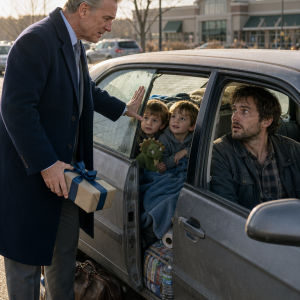

As Caleb was led toward the state vehicle, he looked back at Grant.

“My mother put the truth inside Fox. She said only someone who believed me should open him.”

Part 3 – The Secret Sewn Beneath the Fur

Grant visited the temporary foster center that evening with his attorney, Naomi Clarke. Caleb sat alone at the end of a recreation room, holding the stuffed fox so tightly that its bent ear pressed beneath his chin.

“Is my mother still in the hospital?” he asked.

“She is alive, but people are arguing about whether she can make decisions for herself,” Grant explained.

Caleb lowered his gaze. “Uncle Nolan said grown-ups with money can choose which truth becomes official.”

Naomi crouched beside him. “That is why evidence matters, especially when powerful people expect fear to remain quiet.”

Caleb turned Fox over and showed them an uneven seam along its back. Marissa had repaired the toy many times, but this line used a different color of thread.

With Caleb’s permission, Naomi carefully opened the seam. Inside the stuffing, they found a digital recorder, a small memory card, and a folded note.

The note read: Caleb, I am sorry you had to become brave before you were ready. Keep this safe until someone believes you.

At Grant’s office, a forensic technology specialist copied the files without altering the originals. The longest recording captured an argument inside Marissa’s kitchen.

“I will not sign away Dad’s farm or Caleb’s account,” Marissa said. “You already borrowed against your share.”

Nolan’s voice answered with contempt. “The farm is worth almost two million dollars now that the development corridor has been approved. You do not deserve half merely because Dad trusted you.”

“Caleb’s education fund is not yours.”

“It will become available after you are declared incompetent. Dr. Ross has already prepared an assessment, and I have enough witnesses to describe your behavior.”

A chair scraped across the floor.

“You cannot invent an illness because I refused you.”

“I do not need to invent everything. I only need frightened people, official paperwork, and a judge too busy to examine the details.”

The recording continued through threats, a struggle, and Nolan ordering someone to bring his truck around. A second file contained a conversation between Nolan and Dr. Ross concerning payments disguised as consulting fees.

Naomi removed her glasses slowly. “This evidence could destroy their story, but the defense will challenge authenticity, context, and chain of custody. We need financial records, location data, and independent witnesses.”

Within three days, investigators uncovered Nolan’s motive. His construction company was buried in debt, while the farmhouse had become extremely valuable because of a proposed highway interchange.

Bank records showed transfers to a company controlled by Dr. Ross, while hospital files proved Marissa never attended the appointments listed in his report.

When Nolan learned that Grant was helping, the threats began. A package arrived at Grant’s headquarters containing a stuffed fox with its seams cut open and a message written across the box.

“Children disappear inside systems every day.”

Grant immediately requested emergency guardianship of Caleb while Marissa’s capacity hearing remained unresolved. The judge granted temporary placement after Detective Price confirmed the credible threat.

Caleb entered Grant’s large home carrying only a backpack and Fox. He looked around the quiet living room with suspicion rather than wonder.

“Do rich houses always sound empty?”

Grant considered the question. “Only when the people inside mistake privacy for peace.”

Part 4 – The Man Who Had Learned Not to Notice

During Caleb’s first week with him, Grant canceled trips, attended meetings by video, and learned that nightmares did not respect executive schedules.

One evening, Caleb found an old photograph of Grant beside his mother.

“Did she die when you were little?”

Grant nodded. “I asked several neighbors for help, but they believed I was exaggerating. I decided afterward that needing people was dangerous.”

“That is why you walked away from me?”

The question contained no accusation, which made it harder to answer.

“Yes,” Grant admitted. “I had spent years pretending I was different from the people who ignored me, but I became one of them when believing you became inconvenient.”

Caleb studied him carefully. “You came back before morning.”

“Coming back matters, but it does not erase leaving.”

Meanwhile, Marissa remained under observation because Nolan’s attorney claimed the recording was staged during a paranoid episode.

Naomi filed an emergency petition challenging the hold. Detective Price obtained a warrant for Nolan’s office, where officers found unsigned property-transfer forms, forged medical releases, sedatives matching substances detected in Marissa’s blood, and drafts of statements prepared for local reporters before her disappearance.

A former employee eventually admitted driving Nolan’s truck to the market alley. He claimed Nolan told him they were disposing of damaged furniture, but he remembered hearing repeated knocking beneath the moving blanket.

The employee’s testimony transformed the investigation. Nolan was arrested for kidnapping, assault, attempted financial exploitation, witness intimidation, and conspiracy. Dr. Ross was charged with falsifying medical documents and accepting illegal payments.

However, family court still had to determine whether Marissa could regain immediate custody, and Nolan’s attorneys argued that Grant had manipulated the case for publicity.

Marissa met Grant privately before the hearing. Though physically stronger, she still moved carefully and carried the guarded expression of someone whose words had been used against her.

“Why are you doing this?” she asked. “People like you usually help through foundations because distance keeps the story clean.”

Grant did not defend himself. “I ignored Caleb the first time he asked. Everything afterward began with understanding what that choice almost cost.”

“Guilt can make people generous for a week.”

“Then judge me by what remains after guilt becomes less dramatic.”

Marissa looked through the observation-room window toward Caleb. “He trusts you, which frightens me because he cannot survive another adult disappearing.”

“I will not promise something sentimental. I will promise that every decision involving him will include you whenever the court allows it.”

For the first time, Marissa’s expression softened.

Part 5 – The Recording in the Courtroom

The hearings drew intense media attention. Nolan entered the courthouse in a tailored suit, while Marissa followed Naomi with her shoulders straight.

Before proceedings began, Nolan passed close enough to whisper to his sister.

“Say the recording was created during one of your episodes, and I can still arrange supervised contact with Caleb.”

Marissa looked directly at him. “You depended on my fear longer than you deserved.”

Naomi’s presentation began with the authenticated recordings. A digital forensics expert testified that the files had not been edited, generated, or altered. Metadata placed the recorder inside Marissa’s home, while Nolan’s phone records confirmed his presence during the conversation.

When Nolan’s recorded threat filled the courtroom, nobody moved.

“I only need frightened people, official paperwork, and a judge too busy to examine the details.”

The judge admitted the recording after prosecutors established its chain of custody.

Financial investigators then documented Nolan’s debts and his attempts to borrow against the farmhouse. Dr. Ross, facing overwhelming evidence, accepted a cooperation agreement and admitted that Nolan paid him to fabricate evaluations. Ross also confessed that he contacted the hospital before Marissa arrived so staff would interpret fear and confusion as symptoms of mental illness.

The former employee described helping transport the wrapped body. He began crying when asked why he never checked what was beneath the blanket.

“Mr. Pierce paid my wages, and I told myself that asking questions would cost my job.”

The statement echoed through Grant because it sounded like another version of every passerby who had refused to lift the dumpster lid.

Caleb testified through a child-sensitive video system rather than facing Nolan directly. His voice remained quiet, but every word carried the clarity adults had denied him in the alley.

“I saw Uncle Nolan push my mother into his truck after she stopped moving. I followed on my bicycle because I thought he was taking her to the hospital. He left her behind the market, then told me she had gone away because she did not want me anymore.”

The child advocate asked why Caleb stayed beside the dumpster overnight.

“I heard my mother tap three times. She always tapped three times on my bedroom door before coming inside. I knew she was telling me she was still there.”

Grant lowered his head while Marissa covered her mouth.

The judge terminated the psychiatric hold immediately and restored Marissa’s parental rights. Nolan was denied bail after the court reviewed the threat sent to Grant’s office. The judge also ordered an independent investigation into hospital procedures that had allowed unverified records to override a victim’s account.

“This case demonstrates the danger of treating official language as more credible than lived evidence merely because one arrives on letterhead,” the judge said. “A child repeatedly told adults where his mother was, and nearly every adult decided disbelief was easier than action.”

Part 6 – What Remained After the Headlines

Nolan later pleaded guilty to kidnapping, attempted manslaughter, financial exploitation, fraud, and conspiracy. He received a lengthy state prison sentence. Dr. Ross lost his medical license permanently and received additional penalties for falsifying records and obstructing the investigation.

Marissa recovered the farmhouse and Caleb’s education account. Rather than selling immediately to the developer, she leased part of the land to a community agriculture program and used the income to open a neighborhood bakery near downtown Louisville. She named it Three Taps, honoring the signal Caleb recognized through the dumpster wall.

Grant funded a legal advocacy center employing attorneys, social workers, and patient advocates for families harmed by fraudulent guardianship petitions and coerced evaluations.

Months after the trial, Marissa invited him to the bakery’s opening. Caleb stood behind the counter wearing an oversized apron while explaining the difference between cinnamon rolls and sticky buns to anyone willing to listen.

The old dumpster was gone, replaced by a mural of many hands lifting a heavy lid. Beneath it appeared the words: Believing is often the first step toward looking.

As autumn settled over the city, Grant, Marissa, and Caleb walked along the river after closing the bakery. Caleb held his mother’s hand with one hand and carried Fox beneath the other arm.

“Mr. Grant, are you still rich?” he asked.

Grant smiled. “According to several accountants, unfortunately.”

“Then can rich people learn things regular people already know?”

Marissa laughed softly. “That depends on whether they stop talking long enough.”

Grant looked toward the darkening water before answering.

“Sometimes they learn after discovering that power cannot repair the moment when they first chose comfort over courage.”

Caleb considered this, then slipped his free hand into Grant’s.

“You still came back.”

Grant understood that the boy was not offering forgiveness as a prize. He was simply naming the fact that had allowed everything else to happen.

Their lives did not become perfectly arranged. Marissa attended trauma counseling, Caleb sometimes hid food because safety still felt temporary, and Grant occasionally tried solving emotional problems with money rather than patience. Nevertheless, they learned that healing meant returning, listening, and remaining present after public attention moved elsewhere.

On the first anniversary of Marissa’s rescue, they returned to the mural with Detective Price, Naomi, and several volunteers from the advocacy center. Caleb placed a small paper fox beneath the painted hands.

“This is for everyone who asked for help before somebody listened,” he said.

Nobody applauded immediately because the words deserved silence first.

Grant looked around at the people gathered in the alley and remembered the evening when he had valued a business dinner more than a child’s terror. He could not rewrite that moment, yet he could allow it to remain uncomfortable enough to guide every decision afterward.

The city continued rushing around them, filled with traffic, appointments, and private worries. Somewhere, another frightened voice was probably telling a story that sounded inconvenient, exaggerated, or impossible.

Grant now understood that listening did not require blind acceptance, but it did require stopping long enough to investigate.

For Marissa, justice meant more than Nolan’s sentence. It meant regaining the right to define her own mind after powerful men had tried to label resistance as illness. For Caleb, justice meant knowing that the three taps he heard were real, even when strangers dismissed him. For Grant, justice began with admitting that the worst thing about indifference was how ordinary it felt while it was happening.

Caleb squeezed both their hands as they left the alley.

The stuffed fox remained tucked safely beneath his arm, no longer carrying evidence, threats, or secrets. It was simply a child’s toy again, worn from love rather than fear.

That quiet transformation mattered more than every headline that had followed the trial.

THE END

Related Posts

I Drove To My Mother-In-Law’s House With Signed Divorce Papers, Convinced My Wife Had Already Chosen Another Life. Then I Heard Her Say The Surgeons Could Not Promise She Would Survive The Operation, And That She Had Hidden Her Illness Because She Did Not Want Me To Lose Everything Trying To Save Her. The Envelope Fell From My Hand Before She Opened The Door.

Part 1 – The Envelope On The Passenger Seat For nearly three months, Owen Marshall had been trying to understand how a marriage could disappear without either person...

“‘You’re Making Hundreds of People Late for One Old Lady,’ They Shouted as They Filmed Me. I Lost My Job That Afternoon…Twenty-Four Hours Later, She Vanished… and Everyone Suddenly Realized Why I Had Always Waited.

The Morning They Took My Bus Keys The passengers started clapping before I even opened my mouth. Not because they supported me. Because they thought I was finally...

“Dad… Please Believe Me.” My Eleven-Year-Old Son Begged As Everyone Said He Was Imagining The Pain Inside His Cast—Hours Later, One Woman Uncovered The Truth That Changed Our Family Forever

The Night No One Believed Owen Rain pressed against the windows of a large suburban home outside Columbus, Ohio, turning the quiet neighborhood into a blur of gray...

My Husband Came Home Carrying Another Woman’s Perfume On His Coat. I Was Waiting Beside The Marble Table With Divorce Papers, Financial Records, And Proof That He Had Used My Family’s Foundation To Finance His Affair…

Part 1 – The Night He Returned To An Empty Marriage At 2:47 on a cold Thursday morning, Julian Cross stepped from the private elevator into the penthouse...

After Fifty-Five Years Apart, My Dying Highschool Sweetheart Asked Me to Marry Him in His Hospital Bed—My Cousin Shouted, “He’s Using You for Your Pension.” I Signed the Marriage License Anyway… Because I Had Finally Realized Which Man Was Really After My Money

The Question He Had Waited Fifty-Five Years to Ask Samuel Reed’s hand was cold when he reached across the hospital blanket and closed his fingers around mine. The...

Để lại một bình luận

Email của bạn sẽ không được hiển thị công khai. Các trường bắt buộc được đánh dấu *