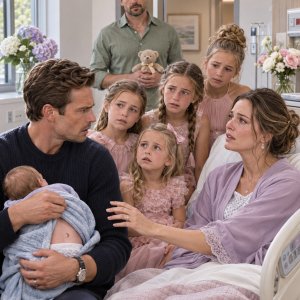
Dorothy turned to me then, and what flashed across her face was not grief. It was exposure. The shock of realizing that the quiet man had kept records for years moved through the room like weather. She had treated Nathan as though his usefulness entitled her to forgiveness. His final act had been a complete refusal.
Deputy Reed cleared his throat.
“Suitcases open. Property returned. Then everyone leaves.”
For the next forty minutes, the relatives unpacked what they had taken. Shirts went back into the closet. Cables returned to drawers. Books returned to shelves. Nathan’s watches were placed back on the tray in our bedroom. Framed photographs came back to the hallway table. No one looked at the urn.
Before Dorothy left, she stopped in the doorway.
“You think this makes you safe?” she asked, her voice low and poisonous.
I stood beside Nathan’s flowers.
“No,” I said. “Nathan made me safe. This only made you visible.”
The door closed behind them.
At last, the condo was quiet. Not peaceful yet, but honest.
Part 4 — Nathan’s Last Message

After Mr. Alvarez and Deputy Reed left, Eleanor stayed with me at the dining table. The inventory list Dorothy had written still lay between us, its neat categories suddenly ridiculous beside the certified documents Nathan had prepared.
Eleanor placed a small flash drive in front of me.
“Nathan recorded this the morning after he signed the final documents,” she said. “It is for you first, and for evidentiary use if anyone contests the trust.”
I inserted it into Nathan’s laptop with hands that did not feel fully attached to my body. His face appeared on the screen, pale beneath hospital lighting, but unmistakably himself. He smiled the crooked smile he used whenever he knew he was being sentimental and pretending not to be.
“Claire,” he said, “if you are watching this, I am sorry. Also, if my family is in the condo right now, I hope you remembered to laugh.”
I did laugh then, and the sound broke something open in my chest.
Nathan continued. He said he had spent too many years confusing loyalty with surrender. He said loving me had taught him that peace required boundaries, not endless patience. He explained that he arranged everything to protect the one person who never reached for his wallet before reaching for his hand.
Then his expression changed.
“For the record,” he said, voice firmer, “Dorothy Waverly and the relatives listed in Eleanor’s file hold no authority over my property, accounts, records, residence, business interests, or personal effects. Any claim otherwise is false. Any use of old keys, old stories, or old family pressure should be treated for what it is: trespass disguised as grief.”
I pressed my fingers to my mouth.
“I know they will say I was influenced,” Nathan continued. “I was. I was influenced by years of watching them turn emergencies into invoices. I was influenced by watching you build a home where no one kept score. I was influenced by finally understanding that blood does not become love merely because it knows which doorbell to ring.”
Eleanor sat quietly across from me, giving me privacy without leaving me alone.
Nathan looked directly into the camera.
“Claire, do not spend your widowhood defending what I already documented. Let the documents speak. Let Eleanor speak. Let silence return to the condo because it belongs to you now, not because they frightened you into it.”
The screen went dark a few seconds later.
I sat there crying, not because I was surprised, but because even at the end, Nathan sounded exactly like himself: exact, tender, careful, and quietly devastating.
Formal challenges never came. Perhaps Dorothy understood that Nathan had built the kind of case a person should not test unless prepared to lose publicly. Perhaps Grant remembered the camera stills. Perhaps Meredith realized probate court was a poor place to improvise innocence. Whatever the reason, their silence was the first gift they had ever given me.
Over the next three weeks, the trust transfers finalized. The condo remained mine. Investment accounts settled. Nathan’s charitable commitments continued through instructions he had signed. I learned more about the architecture of his work in those weeks than I had in ten years of marriage, not because he had hidden himself from me, but because he had refused to make money the center of our home.
That became the saddest irony of all.
The people who wanted Nathan’s assets had never cared enough to understand Nathan.
Part 5 — A Quiet That Finally Belonged To Me

A month later, I walked alone through the old historic district at dusk. The city began sounding like itself again as tourists thinned and restaurant lights warmed the sidewalks. I stopped outside the small café where Nathan and I used to argue about whether private people were born that way or made that way.
Nathan had said they were made, usually by surviving the wrong kind of attention.
He had been right about that too.
I returned home with fresh flowers and stood outside the condo door for several minutes before unlocking it. For weeks, I had been afraid of the first breath after entering, afraid the room would still carry the feeling of hands in drawers and shoes on rugs. But when I opened the door, the condo greeted me with ordinary stillness. Books on shelves. A blanket folded over the sofa. Nathan’s urn beside the window, surrounded by flowers I had chosen myself.
Nothing had been taken.
Something had been lost, but it was not furniture, money, or documents. It was the last illusion that family names guarantee tenderness.
I opened the windows and let humid evening air move through the rooms. Then I placed the flowers beside Nathan and sat on the sofa where his blue carry-on had been. The indentation of that violation was gone now. The sofa was only a sofa again. The room was only a room. Mine, because he had loved me enough to plan for the day I would be too tired to fight alone.
Eleanor called that evening to confirm the final filings had been accepted.
“You are legally clear,” she said. “They can make noise if they want, but they have no path worth taking.”
“Nathan knew them better than I did.”
“He knew paper better than they did,” she replied. “That may have mattered more.”
After we hung up, I brewed tea and found myself laughing softly at how much Nathan would have appreciated that sentence. He believed paper had memory. Signatures, transfers, access logs, beneficiary forms, timestamps; they remembered what people later tried to soften.
In the following months, Dorothy sent one letter through an attorney, written in the injured tone of a woman who believed consequences were disrespectful. Eleanor answered with three pages of citations, dates, camera references, and prior warnings. There were no further letters.
Grant attempted once to suggest Nathan had verbally promised him business support. Eleanor requested documentation. He disappeared.
Meredith posted a vague message about grief changing people and outsiders dividing families. I did not respond. I had learned from Nathan that not every false story deserves oxygen. Some collapse faster when denied an audience.
I spent that first year rebuilding rituals. Sunday coffee by the window. Books stacked on Nathan’s side of the bed until I was ready to move them. Dinner with friends who did not ask what I planned to do with money, only whether I had eaten. I donated some of Nathan’s professional papers to an archive after Eleanor helped me remove confidential material. I continued his scholarships in the name he had used privately for years: Rowan.
One evening, while organizing his office, I found a note tucked inside an old title-history manual. It was not dated. It said simply: Quiet is not emptiness. Sometimes quiet is a locked door that finally holds.
I kept that note on my desk.
The condo never became the same home it had been when Nathan was alive. It could not. His absence lived in familiar places: the empty chair, the second mug, the unread book still marked with a receipt from the café. But the home remained a home, not a crime scene, not a battlefield, not a prize for relatives who arrived with suitcases before grief had been allowed to breathe.
On the anniversary of his passing, I invited a few friends to share dinner. We told stories about Nathan’s dry humor, his impossible patience with complicated documents, his hatred of loud restaurants, and the way he always gave directions using bookstores as landmarks. After everyone left, I stood by the window and looked at the city lights reflected in the glass.
“They never knew who you really were,” I whispered.
Then I smiled, softer this time.
“But I did.”
The quiet that answered me was not empty. It was protected. It was earned. It belonged to me because Nathan had made sure no one could steal it while I was too broken to guard the door.
THE END