Part 1: Thirty Calls That Went Unanswered
The thirtieth time my husband ignored my call, his mother was lying in an emergency department, struggling to breathe through an oxygen mask while I held her trembling hand.
My name is Caroline Bennett, and for twenty years, I had been married to Jonathan Mercer, a successful executive whose professional ambitions had gradually consumed everything else in his life.
His mother, Evelyn Mercer, had become the closest thing to a second mother I could imagine.
She remembered my birthdays, comforted me after my miscarriage, and welcomed me into her home when Jonathan was too occupied with business meetings to notice that I needed someone.
Now she was dying, and her only son was supposedly attending important negotiations.
When he finally answered, I heard waves breaking against a shoreline and a woman’s laughter behind his impatient voice.
“Caroline, will you stop calling me constantly? I’m handling negotiations that are extremely important to the company.”
I looked at Evelyn’s exhausted face.
“Your mother is in the hospital, Jonathan, and the doctors don’t believe she has much time left.”
The connection ended before I could finish explaining.
I tried again, but every subsequent call went to voicemail.
Evelyn’s fingers moved beneath mine.
She opened her eyes and looked at me with extraordinary determination.
Then she reached beneath her blanket, removed something from her clothing, and pressed it into my palm.
A small silver key.
Before I could ask what it opened, the monitors signaled a sudden change.
Medical staff hurried into the room while I moved aside, still holding Evelyn’s final gift.
She died without seeing her son again.
The following morning, I handled the necessary arrangements, contacted the funeral home, and selected the simple white urn she had always preferred.
Jonathan eventually sent a message.
Still busy. Handle Mom’s situation until I get home.
For twenty years, I had excused his absences as the unavoidable cost of success.
But his mother’s death exposed something I could no longer ignore.
He didn’t merely expect me to forgive his neglect.
He expected me to absorb every consequence of it.
That afternoon, I contacted a divorce attorney named Rebecca Sloan.
Three days later, I stood beside Evelyn’s grave in Virginia while mourners asked why her son wasn’t present.
Jonathan had sent a message claiming his flight had been canceled.
I knew he hadn’t boarded any flight.
After the burial, I remembered Evelyn’s cedar cabinet, which she kept locked inside her sewing room.
Once, when Jonathan jokingly tried to open it, she’d warned him that certain things belonged only to people who deserved to understand them.
I drove directly to her house.
The silver key didn’t fit the cabinet’s main lock.
Then I remembered seeing Evelyn reach behind it.
A narrow concealed compartment rested against the wall.
The key fitted perfectly.
Inside was an envelope bearing my name.
Part 2: The Inheritance Behind the Cabinet
I opened Evelyn’s envelope while sitting on the sewing-room floor.
The first document was a property deed transferring ownership of her lakeside house to me six months earlier.
The second concerned an investment account valued at $842,611.
I read both documents repeatedly, scarcely able to comprehend what she had arranged.
Then I discovered her letter.
She explained that Jonathan had been transferring substantial sums from accounts supposedly reserved for her medical expenses into businesses connected with his consulting activities.
Three transactions had particularly alarmed her: $30,000, $45,000, and another $60,000.
Evelyn had also discovered what she believed was Jonathan’s affair.
Eight months earlier, she’d confronted him with evidence involving a younger woman.
He had promised to end the relationship and confess everything to me.
He did neither.
At the bottom of the envelope was a photograph showing Jonathan embracing a woman on a beach eighteen months earlier.
On the reverse, Evelyn had written:
Caroline, that woman is not the only secret he’s keeping.
Before I could examine the remaining papers, a car stopped outside.
Jonathan entered the house moments later, suntanned and visibly irritated.
“What are you doing here, Caroline, and why has someone been going through Mother’s belongings?”
I stood slowly.
He looked around the sewing room before asking an astonishing question.
“Where is Mom? I need to speak with her about something.”
For a moment, I couldn’t breathe.
“Your mother died three days ago, Jonathan, and her funeral was this morning.”
He stared at me.
“You buried my mother without telling me when the service was happening?”
I reminded him about the calls, messages, and funeral arrangements I’d sent.
He finally opened his telephone.
His expression changed as he scrolled through the notifications.
For several seconds, genuine grief crossed his face.
Then he noticed the opened compartment behind the cabinet.
His grief turned into fear.
“What did she leave you, Caroline? Did she give you access to any of her money?”
The question told me more than his apologies ever could.
“She left me the truth, Jonathan, and you should have answered your telephone.”
I walked past him.
That evening, I packed my belongings, placed my wedding ring beside the divorce papers, and left our home.
I rented a small house outside Annapolis under my maiden name.
Four days later, my attorney informed me that Jonathan was challenging Evelyn’s property transfer, claiming she’d lacked the mental capacity to authorize it.
The medical records contradicted that accusation.
But another problem emerged.
Someone else had filed a claim against Evelyn’s estate.
The claimant asserted a direct family relationship nobody had ever disclosed.
I returned to the envelope.
Beneath the investment documents, I found a storage receipt marked Chesapeake Harbor, Unit 317.
Three tiny numbers were engraved on the silver key.
317.
Part 3: The Photograph With Four Names

The secure storage facility stood inside a renovated warehouse near Baltimore’s harbor.
After verifying Evelyn’s instructions and my identification, the manager escorted me downstairs to Unit 317.
Inside a metal box, I found decades of correspondence.
Most letters came from a woman named Margaret Vale.
They described medical expenses, school arrangements, birthdays, and a young girl named Claire.
One sentence appeared repeatedly.
Jonathan must never know that the girl is alive.
The photographs showed Claire growing from childhood into adulthood.
Her gray eyes resembled my husband’s so closely that the connection seemed undeniable.
Then I discovered documents establishing that Jonathan had been adopted.
His original name had been Jonathan Vale.
Evelyn had raised him as her son after her husband, Thomas Mercer, brought him into their marriage.
Thomas had falsely claimed the boy’s biological mother had abandoned him.
In reality, Margaret Vale had given birth to twins.
Thomas took Jonathan and told Margaret the boy had died.
Claire grew up believing her twin brother hadn’t survived infancy.
Evelyn eventually discovered the deception and located Claire, but Thomas intimidated everyone involved into maintaining the separation.
The revelations left me physically sick.
Then my attorney called.
“Caroline, we’ve identified the other claimant, and her name is Claire Vale.”
I told Rebecca about the adoption papers.
She hesitated before continuing.
“Claire is also requesting genetic verification because she believes Jonathan isn’t Evelyn’s biological child.”
Related Posts

“Your Baby Has No Respectable Father!” My Dad Humiliated My 3-Week-Old Son in Front of 30 Wealthy Guests. My Mom Joined In, and My Sister Mocked Him Online. I Quietly Called the Husband They’d Always Looked Down On—My Father Had No Idea What He Was About to Lose.
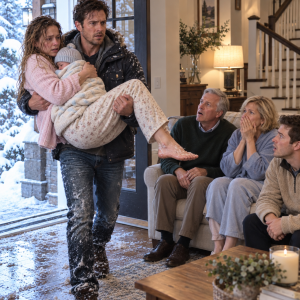
“PUT THAT WOMAN AND HER BABY BACK OUT IN THE SNOW! THIS HOUSE BELONGS TO US NOW!” My Father Roared When I Returned From 18 Months Of Military Deployment And Found My Wife Barefoot On The Frozen Porch, Clutching Our Six-Month-Old Son. I Carried Them Inside Without A Word, Then Looked My Parents Straight In The Eye And Said, “YOU PUT MY WIFE AND BABY OUT LIKE THEY WERE STRANGERS. NOW I’M TAKING BACK EVERY DOLLAR YOU TOOK, EVERY KEY YOU CLAIMED, AND EVERY LIE YOU THOUGHT I’D NEVER UNCOVER.” My Father Laughed—Until I Looked At The Security Camera Above His Head And Reached For My Phone.

“Pull Harder, Brandon. Use Soap, Anything You Need—Just Don’t Let That Young Woman Find Out You’re Already Married.” My Mother-In-Law Said As My Husband Struggled To Remove His Wedding Ring Inside My Penthouse. Then She Told Me To Cook Dinner, Dress Plainly, And Pretend To Be The Housekeeper While They Introduced Him To Another Woman.
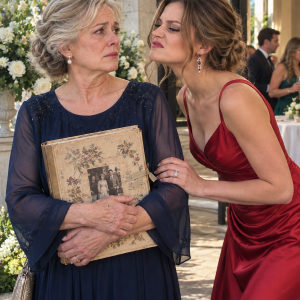
“AFTER TOMORROW, YOU’LL BE NOTHING BUT A BAD MEMORY TO MY HUSBAND. STAY AWAY FROM OUR WEDDING, AND DON’T EXPECT HIM TO COME LOOKING FOR YOU!” My Son’s Fiancée Sneered As I Handed Her The Photo Album I’d Spent Weeks Making. I Didn’t Argue. I Went Home And Stayed There On My Only Son’s Wedding Day. But Just Before The Ceremony, My Son Found That Same Album In The Tr@sh. Minutes Later, My Sister Called Me, Her Voice Shaking: “CAROL, THE WEDDING’S BEEN STOPPED. YOU NEED TO HEAR WHAT JUST HAPPENED!”