PART 1: THE HAND SHE LEFT OPEN
At our niece’s wedding, my husband asked me to dance, and for half a second, twenty-seven years of habit almost placed my hand inside his.
Then I remembered how frequently I had reached toward him while our marriage quietly disappeared, so I smiled without bitterness and answered, “No, thank you, Robert.”
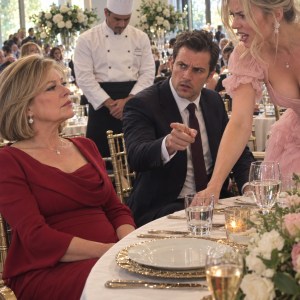
The wedding occupied a renovated textile mill outside Knoxville, Tennessee, where September heat lingered beneath strings of white lights. Beyond the open doors, fields sloped toward the Smoky Mountains, while ivory hydrangeas overflowed from antique copper containers.
My brother’s thirty-year-old daughter, Megan, had married a patient, generous man named Tyler. Watching them promise continued attention mattered more to me than their flowers, expensive dinner, or carefully arranged photographs.
Robert and I had been married for twenty-seven years, and I had reached automatically for him throughout almost every one of them. I passed him coffee across crowded kitchens, straightened his collar before business dinners, and found his hand whenever unfamiliar rooms made either of us uncomfortable.
At fifty-four, Robert remained quietly handsome, although silver now softened his dark hair. The scar near his chin came from repairing our garage door, while reading glasses had recently appeared beside his coffee every morning.
For years, I treasured each physical change as evidence that we were growing older together. By the evening of Megan’s wedding, however, Robert and I had already been separated for six months.
Our twenty-five-year-old daughter, Hannah, stood beside me when Robert approached without his jacket, wearing a loosened tie and the hopeful expression of someone expecting an old ritual to remain available.
“Claire, they are playing our song, so would you dance with me?”
The orchestra had begun a familiar melody we first heard at my cousin’s engagement party. I had been twenty-three, barefoot on my parents’ lawn, while Robert whispered that I looked beautiful despite complaining about my hair throughout the afternoon.
We later danced to it inside our first apartment, during family anniversaries, and once in our kitchen while Hannah slept upstairs with a fever. Every repetition transformed that music into a private record of our marriage.
During our twenty-fifth anniversary dinner, I requested the same song because I was frightened by the growing distance between us. Robert danced while repeatedly checking messages from an employee, and I held him more tightly whenever his attention drifted toward the telephone vibrating inside his pocket.
People watching us probably saw affection, although I was desperately attempting to keep someone from emotionally leaving.
Now Robert extended his hand again, while years of muscle memory urged me to accept.
I remembered countless invitations he had declined without recognizing them as invitations. I had requested evening walks, quiet breakfasts, school events, farmers’ markets, and ten uninterrupted minutes on our porch.
Whenever I asked whether our marriage remained healthy, he promised work would become easier after another quarter, contract, promotion, or supplier negotiation.
His hand waited between us, but mine remained beside my dress.
“No, thank you, Robert, because I would rather stay here.”
His smile weakened as though he had misunderstood ordinary language.
“Come on, Claire, because this has always been our song.”
“I remember perfectly, although I still do not want to dance.”
Robert lowered his hand and studied my face.
“Are you angry with me about something tonight?”
“I am not angry, which is precisely why you cannot repair this moment.”
That answer frightened him more than an accusation could have done. Anger had always contained a hidden request for change, while tears proved that I remained emotionally invested in his response.
My calm refusal demanded absolutely nothing from him.
Robert returned to his table, where he watched Hannah invite me onto the dance floor. Megan, my sister-in-law, and several cousins joined us until we formed a laughing, uncoordinated circle beneath the lights.
Previously, seeing Robert alone would have pulled me across the room. I would have protected him from discomfort, rescued his evening, and interpreted my own abandonment as another responsibility.
That night, I continued dancing without intending to punish him.
For the first time, Robert’s loneliness no longer appeared to be an emergency assigned exclusively to me.
PART 2: A MARRIAGE THAT NEVER EXPLODED
Robert was never violent, cruel, unfaithful, or openly contemptuous, which made explaining our separation remarkably difficult. People recognize obvious betrayal, but neglect can inhabit a respectable home for decades without attracting witnesses.
It pays the mortgage, remembers automobile maintenance, sleeps ten inches away, and still leaves someone feeling completely alone.
When we married, Robert was twenty-seven and worked for a construction-materials distributor in Chattanooga. I was twenty-five and beginning my career as a fourth-grade teacher.
Our first apartment had unreliable plumbing and a kitchen so narrow that opening the refrigerator blocked the doorway. Nevertheless, we ate spaghetti on the floor, danced inside the living room, and considered ourselves fortunate.
Robert cried when Hannah was born, then cried again three years later when our son, Lucas, arrived. During those early years, we operated like partners who assumed attention would remain natural.
Gradually, Robert received promotions while my responsibilities expanded in quieter directions. I continued teaching, managed both children’s schedules, remembered medical appointments, cared for aging parents, planned holidays, purchased gifts, and maintained every relationship connecting our family.
Because I performed those duties reliably, Robert began treating them like self-sustaining systems.
By our fifteenth anniversary, he could not remember the name of my classroom assistant. Three years later, he forgot my mother’s surgery until I telephoned from the hospital.
By our twentieth year, most dinners included Robert answering messages from suppliers, regional managers, or contractors.
“Could you please put your telephone away until we finish eating?”
“I am listening, Claire, although this message requires only a minute.”
Whenever I asked him to repeat what I had said, he offered an apologetic smile and admitted I had caught him. For years, I confused acknowledgment with improvement, believing recognition would eventually produce change.
One Christmas, I bought concert tickets for a band we had loved during college. Robert immediately checked his calendar and warned that a vendor dinner might occur that evening.
I asked him to protect the date, but he responded as though business obligations arrived through natural law rather than personal choices.
When March came, Robert attended the vendor dinner while Hannah accompanied me to the concert. During the second song, she leaned closer and quietly said, “Mom, you are allowed to be angry without immediately defending Dad.”
Her observation followed me home, although nothing changed because Robert still returned every night. He kissed my cheek, paid bills, called after flights landed, and introduced me proudly as his wife.
He never physically disappeared; he simply offered progressively less of himself while occupying the same space.
I explained that mature marriage involved patience, changing passion, demanding careers, and imperfect people. Whenever disappointment required another adjustment, I made myself smaller until our marriage fit Robert comfortably and left almost no room for me.
Our twenty-fifth anniversary finally revealed how far we had drifted. I arranged dinner overlooking the Tennessee River, wore the blue dress Robert once praised, and ordered wine we both enjoyed.
He arrived late, apologized sincerely, then spent dessert responding to emails.
When our song began, I asked him to dance beside the terrace even though the restaurant had no formal dance floor.
He agreed because I requested it, not because he wanted closeness. Thirty seconds later, his telephone vibrated, his body responded immediately, and his attention left before either of us moved apart.
I tightened my arms around him, and Robert asked whether something was wrong.
“Everything feels wrong, but I do not know how many different ways remain for me to explain it.”
He promised the next quarter would become quieter.
Instead, I gradually stopped asking him to dance, walk, attend markets, watch television, or share dinner. Robert interpreted our peaceful house as evidence that the marriage had improved.
In reality, I had stopped submitting invitations he would probably decline.
PART 3: THE LIFE SHE BUILT WHILE WAITING ENDED

Without announcing any transformation, I began walking with my neighbor three mornings each week. I enrolled in a pottery class, planted herbs, visited Hannah without checking Robert’s schedule, and attended Lucas’s races by myself.
These were ordinary decisions, but ordinary life was where I had abandoned myself and eventually began returning.
Robert noticed that I appeared happier, although he assumed his workload had finally stopped bothering me. He never understood that I had simply removed his participation as a requirement for my enjoyment.
Six months before Megan’s wedding, I told him I wanted a separation.