Behind Closed Doors Moral Stories

My Daughter-In-Law Ordered Lobster For Everyone Except Me, Slid Me A Glass Of Water, And My Son Looked Me In The Eye Before Saying, “Know Your Place, Mom.” I Didn’t Argue… Because Thirty Seconds Later, Someone Walked Out Of The Kitchen And Every Face At That Table Turned White

The Dinner Where My Son Asked Me to Disappear

The invitation arrived on a quiet Monday afternoon.

My son, Colton, called while I was watering the herbs on the narrow balcony of my apartment in Richmond, Virginia. These days, he rarely called. Most of our conversations had been reduced to brief messages sent between meetings.

Hope you’re doing well.

Busy week. Talk soon.

Maybe next Sunday.

So when I saw his name on my phone, I answered before the second ring.

“Mom, Tessa and I want to take you to dinner on Friday,” he said.

His voice sounded warmer than usual, almost like the young man I remembered.

“Just the three of us?” I asked.

There was a short pause.

“Her parents will be there too. We thought it might be a good chance for everyone to reconnect.”

Reconnect.

I held onto that word longer than I should have.

For months, I had felt myself slowly disappearing from Colton’s life. He stopped inviting me to holiday gatherings unless someone else reminded him. He rarely brought my granddaughter, Maisie, to visit. Whenever I called, Tessa seemed to have already made plans for them.

I convinced myself that Friday night might be a new beginning.

“I’d love to come,” I said.

“Great. Seven thirty at Beaumont House.”

I knew the restaurant.

Everyone in Richmond knew Beaumont House.

It occupied a restored brick mansion overlooking the James River, with tall windows, handmade chandeliers, and a dining room that was booked weeks in advance. Business leaders held private dinners there. Politicians celebrated election victories there. Couples saved for months to celebrate anniversaries beneath its painted ceiling.

What Colton did not know was that I knew Beaumont House better than almost anyone.

I had spent twelve years building it.

The Life I Gave My Son

My name is Evelyn Mercer, and for most of my adult life, I introduced myself as Colton’s mother before anything else.

His father left when Colton was six.

He did not leave with a dramatic argument or a final speech. He simply packed two suitcases one morning, said he needed a different life, and drove away before breakfast.

After that, there was only Colton and me.

I cleaned vacation homes near Williamsburg during the day, prepared meals at a retirement community in the evenings, and handled bookkeeping for a small bakery on weekends. I slept whenever I could and saved whatever remained after rent, groceries, and electricity.

Colton never wore the newest shoes, but he always had clean ones.

He never attended the most expensive summer camps, but I made sure he joined the school science club he loved.

When he was accepted into college, I smiled until he left the room and then sat alone in the kitchen, wondering how I would pay for it.

Somehow, I did.

I took extra shifts. I sold the small gold bracelet my mother had given me. I borrowed against my car and paid the loan back slowly.

When Colton graduated, he wrapped his arms around me and whispered:

“Everything I become will be because of you.”

For years, I believed him.

Then he met Tessa Langford.

She was polished, confident, and raised in a family that treated social connections like currency. Her father, Douglas, owned several commercial properties. Her mother, Valerie, served on charity boards and spoke about neighborhoods as if people were either investments or problems.

At first, Tessa was charming.

She brought flowers to my apartment. She asked for my recipes. She told Colton he was lucky to have a mother who had worked so hard.

After the wedding, her kindness became colder.

She corrected the way I pronounced certain menu items.

She suggested I replace my furniture before they brought friends over.

At Maisie’s third birthday party, she moved the cake I brought to a side table because it did not match the professional dessert display.

“We’ll save yours for later,” she said.

Later never came.

The Chair at the End of the Table

On Friday evening, I wore a navy blue dress I had owned for several years. It was simple, well fitted, and carefully pressed. I pinned my silver hair into a neat twist and wore the pearl earrings Colton had given me after his first promotion.

I arrived at Beaumont House at 7:34.

Tessa noticed immediately.

“You’re late, Evelyn,” she said, glancing at her watch.

She never called me Mom.

Not even after eight years of marriage.

“There was an accident near the bridge,” I explained.

“Of course.”

Her tone suggested that traffic was a personal failure.

Colton sat beside her, wearing a dark suit and the expression of a man who wanted the evening to pass without difficulty.

Douglas and Valerie were already drinking wine.

There were five chairs at the table. Mine was positioned at the far end, close to the service station.

I sat down and placed my purse beside my feet.

A server named Nathan approached with five menus. I recognized him immediately. He had worked at Beaumont House for almost four years.

He recognized me too, but I gave him the smallest shake of my head.

Not yet.

Tessa barely opened her menu.

“We’ll have four orders of the butter-poached lobster, the seasonal vegetables, and the reserve Chardonnay,” she said.

Nathan hesitated.

“Four orders, ma’am?”

Tessa looked toward me as though she had only just remembered I was there.

“Yes. Four.”

She turned to me with a thin smile.

“Evelyn won’t be eating. Water will be enough for her.”

For a moment, I thought I had misunderstood.

“I’m sorry?” I said.

Tessa folded her hands.

“Colton told us you’ve been trying to save money. This restaurant is expensive, and we don’t want you feeling obligated to contribute to the bill.”

“I didn’t say I couldn’t pay.”

Colton finally looked at me.

There was discomfort in his eyes, but no courage.

“Mom, please don’t make this awkward,” he said quietly. “Just accept the gesture.”

“What gesture?”

He leaned closer.

“Knowing when something isn’t meant for you.”

My chest tightened.

Tessa lifted her wine glass.

“Exactly. Everyone has a place, Evelyn. Life becomes easier when people understand theirs.”

Nathan was still standing beside us, clearly wishing he could disappear.

I looked at him and said calmly:

“Water will be fine.”

Tessa relaxed.

She believed she had won.

A Meal Served Without Mercy

The lobster arrived on four white porcelain plates.

The aroma of butter, lemon, and fresh herbs spread across the table. Tessa’s parents praised the presentation while Colton focused on cutting his food into careful pieces.

No one offered me bread.

No one asked whether I had eaten.

My glass of water stood in front of me, gathering droplets along the sides.

Valerie studied my dress.

“That color is very practical,” she said. “I suppose practical clothing makes sense when someone is living on a fixed income.”

“Evelyn has always been practical,” Tessa added. “She’s never been interested in appearances.”

The two women exchanged a look.

Douglas turned toward Colton.

“Your promotion should be finalized next month,” he said. “I spoke with Leland yesterday. He understands that you’re part of our family now.”

Colton smiled.

“I appreciate that, sir.”

I watched my son thank another man for opening a door I had spent twenty years preparing him to reach.

Tessa took a sip of wine.

“The new salary will help with the house,” she said. “We finally found a property in Westham. Five bedrooms, a pool, and enough space to host the right people.”

“That sounds wonderful,” I said.

“It is,” she replied. “Although we’ll need to be more careful about visitors. We want Maisie surrounded by people who reflect the future we’re building.”

I knew where the conversation was going.

“Am I included in that future?”

Colton shifted in his seat.

Tessa answered for him.

“You’ll always be part of the family in some way, but we think it’s best if you stop appearing at professional events and larger gatherings.”
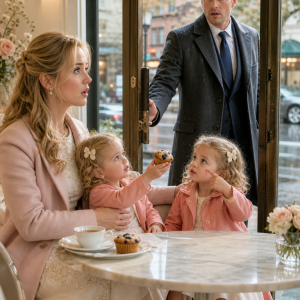

The words were delivered in the same tone someone might use to change a dinner reservation.

“Why?”

Valerie sighed as though I were forcing them to explain something obvious.

“Sometimes people make assumptions based on presentation. Your background is very different from ours.”

“My background?”

Tessa placed her fork down.

“Please don’t turn this into an argument. We’re trying to protect Colton’s reputation. At Maisie’s birthday, several guests thought you were a member of the catering staff.”

I remembered that afternoon.

I had arrived early to arrange flowers and help Maisie put on her yellow party dress. I had brought a homemade card and a strawberry cake from a neighborhood bakery she loved.

Tessa had hidden the cake in the laundry room.

“Maisie liked that cake,” I said.

“Children like many things that aren’t appropriate,” Tessa replied.

Colton remained silent.

I looked at him.

“Do you agree with her?”

He swallowed.

“Mom, our lives are changing. You need to understand that.”

“What exactly do I need to understand?”

His jaw tightened.

“That you cannot keep expecting us to carry you into every room we enter.”

I stared at him.

This was the little boy whose fever I had watched through entire nights. The teenager whose college application I had checked three times. The man whose wedding suit I had quietly paid for when he could not afford it.

Now he spoke to me as if I were something heavy he had finally grown tired of lifting.

“I never asked you to carry me,” I said.

Tessa leaned back and smiled.

“Then we understand each other.”

I slowly nodded.

“Yes,” I replied. “I believe we finally do.”

What They Thought I Had

Dessert arrived for four people.

Chocolate mousse with sugared berries.

Nathan placed the plates down, but before leaving, he glanced at me again.

I gave him another small nod.

Soon.

Douglas ordered brandy.

As they ate, the conversation turned to money, travel, and people they believed mattered.

Valerie asked whether I still worked.

Before I could answer, Tessa said:

“Evelyn has done kitchen work, cleaning, and other service jobs. She’s had a difficult life.”

“Honest work,” Douglas said. “Though naturally, we wanted something more refined for our daughter.”

I folded my hands in my lap.

“Do you believe working in a kitchen is unrefined?”

He smiled politely.

“Not unrefined. Just limited.”

“Interesting.”

Tessa’s eyes narrowed.

“Why do you keep saying things like that?”

“Because I’m learning a great deal tonight.”

Colton exhaled with irritation.

“Mom, stop acting mysterious. You’re making everyone uncomfortable.”

“Am I?”

“Yes.”

He lowered his voice.

“You were invited here so we could establish boundaries, not so you could create a scene.”

That sentence gave me the final piece of clarity I needed.

This dinner had never been about reconciliation.

It was an organized dismissal.

They had invited me to one of the finest restaurants in the state, denied me a meal, and explained why I no longer deserved a visible place in their lives.

What none of them understood was that every light fixture above us, every plate on the table, and every bottle stored in the cellar belonged to me.

The Hallway They Did Not Recognize

When the bill arrived, Colton paid without looking at the total.

Then Tessa stood and adjusted her coat.

“I’m glad we had this conversation,” she said. “I hope there won’t be any confusion going forward.”

“There won’t be,” I assured her.

They began walking toward the entrance.

I remained seated.

“Mom,” Colton said. “Are you coming?”

“I need to speak with someone.”

Tessa rolled her eyes.

“Please don’t bother the staff.”

I picked up my purse and walked past them.

Instead of turning toward the restrooms, I entered the private hallway leading to the kitchen and administrative offices.

Nathan opened the door for me.

Inside, the kitchen was moving with its usual controlled energy. Pans hissed. Orders were called. Plates moved beneath bright lights.

My executive chef, Graham Sutter, saw me and hurried over.

“Ms. Mercer, I was worried,” he said. “We saw what was happening at your table.”

“I know.”

“Why didn’t you let us intervene?”

I looked through the kitchen window toward the dining room.

“Because I needed to hear everything they were willing to say.”

Graham’s expression softened.

He had been with me since Beaumont House opened. He remembered when the kitchen had unfinished walls and the dining room contained only six borrowed tables.

“What would you like us to do?” he asked.

“Come with me.”

The Owner of Beaumont House

Colton, Tessa, and her parents were waiting near the entrance when I returned.

Tessa looked annoyed.

“What took so long?”

Before I answered, Graham stepped into the dining room behind me.

Several staff members noticed him and became still.

He approached with professional calm.

“Ms. Mercer,” he said, loud enough for everyone nearby to hear, “the supplier agreement is ready in your office. Would you prefer to sign it tonight, or should I leave it for tomorrow?”

Tessa frowned.

“Why is he asking you?”

Graham turned toward her.

“Because Ms. Mercer owns Beaumont House.”

Silence spread through the entrance.

Colton stared at me.

“What did he say?”

“I said your mother is the owner,” Graham replied. “She founded the restaurant twelve years ago.”

Tessa laughed once, but the sound was unsteady.

“That isn’t possible.”

I looked around the dining room.

“I chose the building. I designed the first menu with Graham. I negotiated the renovation loan, hired the staff, and worked here seven days a week until the business became profitable.”

Colton’s face lost its color.

“You told me you worked in restaurants.”

“I did.”

“You never said you owned one.”

“You never asked.”

Tessa stepped closer.

“But you live in a small apartment.”

“Because I like my apartment.”

“You wear ordinary clothes.”

“Because they are comfortable.”

“You brought a store-bought cake to Maisie’s party.”

“Because she loved that bakery’s strawberry cake.”

I held her gaze.

“Money is a tool, Tessa. It is not a costume I am required to wear so people like you will recognize my worth.”

Douglas cleared his throat.

“This is clearly a serious misunderstanding.”

“No,” I said. “A misunderstanding is ordering the wrong wine. What happened tonight was a decision.”

I looked at Colton.

“You believed I had nothing. Because of that, you allowed your wife to deny me a meal and tell me I did not belong in your life.”

His eyes filled with tears.

“Mom, I didn’t know.”

“That is precisely the point.”

The Apology That Came Too Late

Tessa’s tone changed immediately.

The cold superiority disappeared.

“Evelyn, perhaps we handled the conversation poorly.”

“You handled it exactly as you intended.”

“We were trying to protect our family.”

“From what? A grandmother who brought a cake? A mother who wore the same dress twice?”

She looked away.

Colton stepped toward me.

“I’m sorry.”

“Are you sorry because you hurt me, or because you discovered I own the restaurant?”

He stopped.

For several seconds, he could not answer.

That silence told me more than any apology could.

Finally, he whispered:

“I don’t know.”

It was the most honest thing he had said all evening.

I nodded slowly.

“Then you are not ready to apologize.”

Tears rolled down his cheeks.

“Please don’t walk away from me.”

“You walked away from me long before tonight.”

He covered his mouth, trying to control his breathing.

Tessa’s father stepped forward.

“Surely we can discuss this privately and reach a reasonable arrangement.”

“Arrangement?” I repeated. “You mean an arrangement now that you believe I have something useful to offer?”

His expression hardened.

“We are respectable people.”

“Respectable people do not decide someone’s value based on clothing, income, or social access.”

I gestured toward the table where they had eaten.

“Real character is revealed by how you treat the person you believe has nothing to give you.”

No one answered.

The Legacy I Changed That Night

I turned back to Colton.

“For years, I planned to leave my businesses and investments to you and Maisie.”

His eyes widened.

Tessa became completely still.

“I built all of this believing it would protect your future,” I continued. “But money placed in the hands of people without compassion does not become a blessing. It becomes permission to harm others.”

“Mom, please.”

“Maisie will be protected,” I said. “Her education will be secured through a trust that neither you nor Tessa can control. The rest of my estate will be reconsidered.”

Tessa’s face tightened.

“You would punish your own son over one dinner?”

“This is not about one dinner. This dinner simply revealed what had already been growing inside this family.”

Graham remained beside me, silent and steady.

I looked at all four of them.

“You invited me here to teach me my place. Instead, you taught me yours.”

Then I asked Graham to escort them out.

Colton stopped at the door.

“Will you ever speak to me again?”

I wanted to say yes.

Every part of the mother I had been wanted to comfort him.

But love without boundaries had helped create this moment.

“When you can understand why tonight was wrong without mentioning my money, call me,” I said. “When you can respect the woman in the simple dress as much as the owner of Beaumont House, we may have something to discuss.”

He nodded through his tears.

“I love you, Mom.”

“I love you too,” I replied. “But love does not require me to accept disrespect.”

Then he walked into the night.

The Life I Finally Chose

After the restaurant closed, I sat alone in my office.

Photographs of Colton covered one wall.

His first day of school.

His college graduation.

His wedding.

Maisie asleep in my arms.

For years, I had looked at those pictures as proof that every sacrifice had been worth it.

That night, I understood something different.

Sacrifice is not automatically noble.

Sometimes, endless sacrifice teaches people that your needs do not matter.

Sometimes, silence teaches them that they may continue hurting you without consequences.

I drove home after midnight.

My apartment felt peaceful when I opened the door. I made tea, removed my pearl earrings, and sat by the window.

A message from Colton arrived.

“I am ashamed of what I did. I know saying sorry is not enough. I am going to get help, take responsibility, and become someone Maisie can learn kindness from. I will not ask you for money or forgiveness. I only hope that one day my actions will show you I finally understand.”

I read it twice.

Then I placed my phone facedown.

Perhaps he meant it.

Perhaps he did not.

Time would reveal the truth.

The next morning, I called my attorney and created a protected education trust for Maisie. I also began organizing a foundation to support single mothers who wanted to start small businesses.

For the first time, I booked the trip to Italy I had postponed for fifteen years.

I registered for a painting class.

I ordered a new reading chair for my apartment, not because anyone would see it, but because I wanted it.

My life had always belonged to other people.

To my husband until he left.

To my son while he grew.

To my businesses while they struggled.

That dinner gave me something I had not expected.

It gave me permission to belong to myself.

They told me to know my place.

Now I did.

My place was not at the end of a table, waiting for someone else to decide whether I deserved a plate.

My place was anywhere I stood with dignity.

A person’s true character is not revealed by how they treat someone powerful, but by how they treat the person they believe has no influence, no wealth, and nothing useful to offer them in return.

Love should never require someone to surrender their dignity, remain silent during humiliation, or accept disrespect simply because the person causing the pain is a member of the family.

Parents may sacrifice years of comfort to create opportunities for their children, but children must still learn that gratitude is demonstrated through consistent respect rather than occasional words.

Money can change the way opportunistic people behave, but it cannot create genuine kindness, repair weak character, or purchase the loyalty that should have existed before wealth was revealed.

Living modestly does not mean someone has failed, because some of the strongest and most successful people do not feel the need to display their achievements through expensive clothing or public approval.

Setting boundaries is not an act of revenge when those boundaries are necessary to protect peace, emotional well-being, and the self-respect that has been ignored for far too long.

An apology becomes meaningful only when a person understands the damage they caused, accepts responsibility without excuses, and changes their behavior even when no reward is promised.

Family should be a place where people feel valued and protected, not a social ranking system where affection is offered according to income, status, appearance, or useful connections.

Sometimes the most loving decision is not immediate forgiveness, but enough distance to allow truth, responsibility, and genuine transformation to emerge through actions over time.

No one should wait for another person to assign them a place in life, because dignity begins the moment we recognize our own worth and refuse to remain where we are treated as less than human.

Related Posts

Three Weeks After Our Wedding, My Mother-in-Law Handed Me A Rental Contract And Brought Twenty-Seven Relatives To Laugh At My “Tiny Apartment”—No One Expected The Quiet Woman They Looked Down On To Open The Private Elevator To A Penthouse She Actually Owned

The Lease Agreement Waiting After My Wedding Three weeks after my wedding, my mother-in-law placed a rental agreement in front of me and explained that living with her...

On My 60th Birthday, My Husband Looked at Me and Said, “You Smell Like an Old Woman. Eat in the Kitchen.” Then He Asked for My Retirement Savings So He Could Vacation With Another Woman… He Never Expected What I Did the Next Morning. A Year Later, He Was the One Kneeling at My Door Begging Me to Come Home

Home No Longer Felt Like Home The first thing my husband noticed on the morning of my sixtieth birthday wasn’t the fresh blueberry muffins cooling on the counter...

My Husband Told Me He Was About To Scrub Into Emergency Surgery And Would Be Saving Lives All Night—But He Never Expected Me To Be Standing Above The Airport, Watching Him Laugh With Another Woman… One Phone Call From Me Wiped The Smile Off His Face, And In That Moment, He Realized He Had Just Made The Biggest Mistake Of His Life

I Caught My Husband Lying Beneath the Airport Lights—But the Missing Family Ring Revealed a Secret Far Bigger Than His Affair The Lie I Witnessed With My Own...

A Wealthy Widower’s Baby Cried for Three Straight Hours on an Overnight Flight—Until a 16-Year-Old Girl From Economy Held Her and Hummed the One Lullaby Only His Late Wife Had Known. When the Girl Revealed Her Last Name, an Older Woman Rushed Forward With a Worn Music Box and a Sealed Envelope—Then His Mother Called With a Warning That Exposed Why They Had Been Kept Apart for Seventeen Years…

The Child Who Recognized the Song Three Hours Above the Clouds By the time the overnight flight from San Diego reached the darkened skies above the Midwest, nearly...

“You Bought The Wrong Coffee Again,” My Husband Said Before Slapping Me Across The Face In Front Of His Mother. Then He Smirked And Ordered,”Tomorrow You’ll Smile And Serve Breakfast Like Nothing Happened.” Twenty-Four Hours Later, He Was Still Sitting At The Same Dining Table When The Handcuffs Came Out.

The Blue Cup The first thing Laurel Bennett noticed was that the coffee cup had survived. It sat upright beside the kitchen sink, pale blue ceramic gleaming beneath...

Để lại một bình luận

Email của bạn sẽ không được hiển thị công khai. Các trường bắt buộc được đánh dấu *