The Bride Who Thought She Controlled Everything
The wedding at Foxglove Manor, just outside Charlottesville, Virginia, looked like a scene created for the cover of an elegant lifestyle magazine.
Hundreds of tiny lights glowed beneath the branches of ancient maple trees. Cream-colored roses surrounded the ceremony arch, while long tables covered in soft linen stretched across the garden. A string quartet played near the fountain, and servers moved carefully through the crowd carrying trays of sparkling drinks and beautifully arranged appetizers.
Nothing appeared out of place.
Every flower had been inspected.
Every chair had been positioned at the perfect angle.
Every detail had been chosen to impress the wealthy guests who had traveled from across the country.
Twenty-nine-year-old Marlowe Sutter stood in the center of it all, wearing a custom ivory gown with delicate hand-sewn details along the sleeves. Her blonde hair had been arranged in an elegant twist, and the diamonds around her neck reflected the lights whenever she turned her head.
She looked radiant.
More importantly, she felt victorious.
That evening, Marlowe had married Julian Pembroke, the only son of one of Virginia’s most respected business families. The Pembroke name was connected to hotels, historic properties, investment companies, and several charitable foundations.
To the guests, it was a beautiful marriage between two attractive young people.
To Marlowe, it was the beginning of the life she believed she deserved.
However, there was still one person whose presence made her uncomfortable.
Lenora Pembroke.
Julian’s mother.
Lenora stood near a stone fountain at the edge of the reception garden. She wore a modest pale-blue dress, small pearl earrings, and comfortable silver shoes. She had no personal assistant beside her and made no effort to attract attention.
She did not need to.
Senior employees greeted her respectfully. Longtime family friends stopped to speak with her. Several business partners crossed the garden simply to shake her hand.
The quiet respect surrounding Lenora irritated Marlowe more than open criticism ever could.
For nearly a year, Marlowe had tried to reduce Lenora’s role in the wedding.
She had changed planning meetings without informing her.
She had rejected Lenora’s suggestion to include a family heirloom in the ceremony.
She had removed several of Lenora’s closest friends from the preferred seating area.
Whenever Julian questioned those decisions, Marlowe smiled and explained that she was only trying to modernize the celebration.
Lenora never argued.
She never demanded special treatment.
She simply watched.
Her silence made Marlowe feel as though the older woman could see through every polished smile and carefully prepared excuse.
The Moment the Celebration Changed
As the evening continued, Marlowe noticed a group of prominent guests gathered around Lenora.
They were laughing warmly as she told a story about the early years of the Pembroke family company.
One man placed a respectful hand over his heart before thanking her for something she had done many years earlier.
Marlowe watched from across the garden.
This was supposed to be her evening.
She was supposed to be the woman everyone admired.
Yet Lenora, dressed simply and standing quietly beside a fountain, seemed to command more genuine affection than the bride surrounded by flowers, music, and photographers.
Marlowe’s frustration grew.
She had spent months imagining the moment when she would officially become part of the Pembroke family. In her mind, the wedding would place her at the center of everything.
But as she looked around the estate, she began to understand something she did not want to accept.
A marriage certificate could give her the family name.
It could not give her Lenora’s influence.
A server walked nearby carrying a tray of red wine.
Without pausing to consider what might happen next, Marlowe took a glass.
She crossed the garden slowly.
Several guests noticed the determination in her expression, but no one understood what she intended to do until she was standing directly in front of Lenora.
Lenora stopped speaking and looked at her.
“Is everything all right, Marlowe?”
The calmness in her voice only made the bride feel more challenged.
Marlowe glanced at the guests gathered around them.
Then she lifted the glass.
With one sharp movement, she tipped the wine across the front of Lenora’s pale-blue dress.
The dark liquid spread over the fabric.
The music seemed to disappear.
Conversations stopped in the middle of sentences.
A server froze with a tray in his hands.
Several guests turned toward the fountain, while others quietly reached for their phones.
Julian, who had been speaking with his best man near the dance floor, stared across the garden in disbelief.
Marlowe lifted her chin.
“You have spent this entire year acting as though this family still revolves around you,” she said loudly. “Tonight is not about you.”
A wave of uncomfortable whispers moved through the guests.
Julian hurried toward them.
“Marlowe, what are you doing?”
She looked at him as though he had failed to understand something obvious.
“I am finally setting a boundary.”
Julian’s expression changed from confusion to alarm.
“That is my mother.”
“And I am your wife now.”
Everyone waited for Lenora to respond.
She did not raise her voice.
She did not demand an apology.
She took a linen napkin from a nearby table and gently touched it to the stain on her dress.
Then she looked at Marlowe.
There was no anger in her eyes.
Only disappointment.
That frightened Julian more than anger would have.
He had seen his mother handle difficult negotiations, financial emergencies, and family disagreements. She was always most decisive when she became completely calm.
Lenora folded the napkin once and placed it on the table.
“You are correct about one thing,” she said softly.
Marlowe’s confident expression returned.
“And what is that?”
“Tonight will be remembered as the beginning of something new.”
One Message and Several Silent Screens
Lenora reached into her handbag and removed her phone.
She opened a message that had already been prepared and pressed send.
Nothing happened at first.
Marlowe gave a dismissive laugh.
“Was that supposed to frighten me?”
Before Lenora could answer, an electronic alert sounded near the bar.
The bartender looked down at the payment terminal.
A second alert came from the catering station.
Then another sounded near the floral coordinator’s table.
Within moments, members of the event staff began exchanging worried looks.
The wedding planner hurried toward the accounting desk.
One of the catering managers approached her with a tablet.
“The final payment has been suspended.”
The planner stared at him.
“That cannot be right. Try it again.”
“I already did.”
A representative from the rental company joined them.
“Our account access has been placed on hold as well.”
Across the garden, several vendors began checking their phones.
Marlowe’s expression changed.
She turned toward Lenora.
“What did you do?”
Lenora placed her phone back inside her handbag.
“I protected what belongs to the Pembroke trust.”
The garden became silent again.
Marlowe gave a short, uncertain laugh.
“Julian controls the family trust.”
Julian did not answer.
Lenora looked at her son with sadness.
Then she returned her attention to the bride.
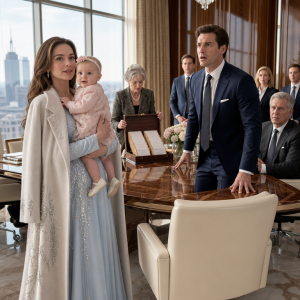
“Julian is a beneficiary. I am the managing trustee.”
The color slowly left Marlowe’s face.
“That is temporary.”
“No,” Lenora replied. “It is not.”
At that moment, her phone rang.
She accepted the video call and turned on the speaker.
A gray-haired attorney appeared on the screen from an office lined with bookshelves.
“Mrs. Pembroke, the emergency protection order has been completed,” he said. “All trust-controlled accounts and properties are now secured.”
Several guests looked at one another.
Marlowe’s hand tightened around the empty wine glass.
Julian stepped closer to his mother.
“What emergency protection order?”
The attorney hesitated.
Lenora answered for him.
“The one I hoped I would never need.”
The Documents Julian Had Never Seen
Lenora asked the wedding planner to bring a chair.
She sat down near the fountain, not because she appeared weak, but because she understood the next conversation would take time.
Julian stood beside her.
Marlowe remained several feet away.
The attorney continued speaking through the phone.
“Approximately four months ago, our office discovered several unusual requests involving assets held by the Pembroke family trust.”
Julian frowned.
“What kind of requests?”
“Requests to change future ownership, alter beneficiary instructions, and transfer control of certain properties into newly created companies.”
The guests nearest the fountain listened in complete silence.
Marlowe interrupted.
“This is completely inappropriate. These are private family matters.”
Lenora looked at her.
“They became everyone’s concern when you chose to make a private family disagreement part of the reception.”
Marlowe opened her mouth but said nothing.
The attorney lifted a folder toward the camera.
“We have copies of email correspondence, draft agreements, identification records, and electronic authorization requests.”
Julian slowly turned toward his wife.
“Marlowe, do you know anything about this?”
She looked past him.
That refusal to meet his eyes gave him the first part of his answer.
“I was only trying to organize our future,” she said.
“By transferring family assets?”
“They would eventually be yours.”
“That is not what I asked.”
Marlowe’s voice became defensive.
“Your mother controls every decision. I was trying to make sure we would not spend the rest of our lives asking her for permission.”
Lenora remained calm.
“You never needed my permission to build a life with my son.”
Marlowe looked directly at her.
“But we needed your approval to access anything meaningful.”
Julian’s expression filled with disbelief.
“Anything meaningful?”
Marlowe realized too late what she had revealed.
She reached for his hand, but he stepped back.
The Property at Briar Lake
The attorney opened another document.
“There is also the matter of Briar Lake House.”
Julian’s face changed immediately.
Briar Lake House was not the largest property owned by the family.
It was not the most valuable.
But it was the one that mattered most to him.
His late father had restored it by hand over many summers. It was where Julian had learned to swim, where family holidays were held, and where Lenora and her husband had celebrated their fortieth anniversary.
“What about the lake house?” Julian asked.
The attorney looked down at the document.
“A request was submitted to place the property under a private company that would become jointly controlled after the marriage.”
Julian turned toward Marlowe.
“You tried to move the lake house?”
“I did not try to take it away from anyone.”
“Then why did you not tell me?”
“Because you always become emotional when that house is mentioned.”
The answer stunned him.
Marlowe continued, desperate to explain.
“It sits empty most of the year. We could renovate it, rent it for private events, or sell it and invest the money properly.”
Julian stared at her as if she had become a stranger.
“That house is where my father spent the last peaceful years of his life.”
“Memories do not pay property taxes, Julian.”
The sentence settled heavily over the garden.
Lenora lowered her eyes.
Julian remained silent for several seconds.
When he finally spoke, his voice was quieter.
“How long have you been planning this?”
Marlowe did not answer.
The attorney did.
“The first draft was created seven months ago.”
Seven months.
Long before the wedding.
Long before Marlowe had promised to love Julian for the person he was rather than the life surrounding him.
A Lunch That Revealed Everything
Lenora slowly stood.
“The wine is not why I secured the accounts,” she said. “It only confirmed that waiting any longer would cause more harm.”
Julian looked at her.
“How long have you known?”
“Long enough to hope I was wrong.”
She turned toward the guests.
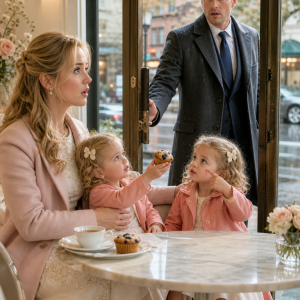
“Six months ago, I invited Marlowe to lunch because I knew there was tension between us. I wanted to give our relationship another chance.”
Marlowe folded her arms.
“That lunch was a test.”
“No,” Lenora replied. “It was an invitation.”
Lenora remembered the quiet restaurant, the small table by the window, and the careful way she had tried to speak without judging the young woman her son loved.
“I told her that the Pembroke family did not begin with estates, hotels, or investment accounts. My husband and I started with one small roadside inn that had leaking pipes and six rooms we cleaned ourselves.”
Several longtime family friends nodded.
They remembered those years.
“I told Marlowe that I did not care about her family background or how much money she had. I only wanted her to respect Julian and build an honest life with him.”
Marlowe looked away.
Lenora continued.
“She told me honesty was a beautiful idea for people who did not understand how the world worked.”
“That is not exactly what I said.”
“Then tell Julian what you said.”
Marlowe pressed her lips together.
Lenora waited.
At last, Marlowe spoke.
“I said love is easier when people do not have to worry about money.”
“And then?” Lenora asked.
Marlowe said nothing.
Lenora completed the sentence.
“You said you had not worked this hard to marry into an influential family only to live like an ordinary couple.”
Julian closed his eyes.
For months, he had defended Marlowe whenever someone questioned her choices. He had told himself she was ambitious, misunderstood, and under pressure from the wedding.
Now he understood that the signs had always been present.
He had simply renamed them so he would not have to face them.
The Child Who Asked the Honest Question
A small figure stepped out from behind one of the tables.
It was Julian’s nine-year-old niece, Wren.
Her parents had tried to keep her away from the conversation, but children often understand more than adults expect.
She walked toward Lenora and gently took her hand.
“Grandma, are you all right?”
Lenora’s expression softened immediately.
She knelt so they were at the same height.
“I am all right, sweetheart.”
Wren glanced at the stain on her grandmother’s dress.
Then she looked at the adults standing around them.
“Did you know this was going to happen?”
Lenora shook her head.
“Not exactly like this.”
Wren thought for a moment.
“Then why did you come to the wedding?”
The question was simple.
The answer was not.
Lenora looked at Julian.
“Because your uncle deserved the opportunity to see the truth before he built his whole future around something that was not real.”
Julian looked down.
Marlowe’s eyes filled with tears.
For the first time that evening, she no longer appeared angry or confident.
She appeared afraid of what she had lost.
The Decision Made Beneath the Garden Lights
The quartet had stopped playing.
The food remained untouched on many tables.
The elegant reception that had taken a year to plan was quietly coming apart.
Julian stood beneath the glowing lights with the woman he had married only hours earlier.
Marlowe removed one of her earrings with an unsteady hand.
“I did love you,” she said.
Julian studied her face.
He believed that some part of her was telling the truth.
That made the moment even more painful.
“Maybe you did,” he replied. “But at some point, the life connected to my name became more important to you than the person carrying it.”
“That is not fair.”
“You prepared legal documents involving my family’s property without telling me.”
“I was thinking about our future.”
“You were planning a future in which everything already belonged to you.”
Marlowe wiped her cheek.
“Are you ending our marriage over paperwork?”
Julian looked toward his mother’s stained dress.
Then he looked at the attorney’s documents, the worried vendors, and the guests who had witnessed everything.
“This is not about paperwork.”
He paused.
“It is about the person you became when you believed no one could tell you no.”
Marlowe lowered her head.
For once, there was no argument she could offer that would change what everyone had seen.
The Apology That Came Too Late
The guests began leaving quietly.
The wedding planner spoke with the vendors and assured them that their completed work would be paid from a separate account after the records were reviewed.
Servers cleared the tables.
The photographers packed their equipment without asking for final pictures.
Near the fountain, Julian approached his mother.
For several seconds, neither of them spoke.
Then he wrapped his arms around her.
“I am sorry,” he whispered.
Lenora held him close.
“You do not need to apologize for believing someone you loved.”
“You tried to warn me.”
“I tried to help you notice what you were not ready to see.”
Julian stepped back.
“Why did you not show me the documents earlier?”
Lenora’s eyes filled with sadness.
“Because I wanted you to ask questions for yourself. A truth forced upon someone can feel like an attack, even when it is offered with love.”
He nodded slowly.
“I should have listened.”
Lenora touched his cheek.
“Sometimes a good heart learns slowly because it keeps hoping everyone else has a good heart too.”
A Simpler Gathering at Briar Lake
Several months later, autumn covered the Virginia hills in shades of gold, copper, and deep red.
The Pembroke family gathered at Briar Lake House for the first time since the wedding.
There were no crystal lights.
No imported roses.
No orchestra or formal dinner.
A long wooden table stood on the porch, covered with homemade food. Children played near the trees while the adults talked without worrying about appearances.
Wren ran across the yard carrying a bright red kite.
Her laughter floated over the lake.
Julian sat beside Lenora on the porch steps.
He looked healthier than he had in months.
The marriage had been formally set aside after a careful legal process. Marlowe had moved to another state and begun rebuilding her life away from the Pembroke family.
Julian did not speak about her with bitterness.
He had loved her once.
He simply understood now that love could not survive where trust had been quietly replaced by calculation.
He watched the sunlight move across the water.
“Do you regret what happened that night?”
Lenora considered the question.
“I regret that you were hurt.”
“But do you regret stopping everything?”
She shook her head.
“No.”
“Why?”
Lenora looked toward the children playing beside the lake.
“Because losing a beautiful illusion can feel painful, but continuing to live inside it can cost much more.”
Julian followed her gaze.
The future was not the one he had imagined while standing at the wedding altar.
It was quieter.
Less certain.
Far more honest.
For the first time in a long while, that felt like enough.
A person’s character often becomes clearest in the moment they believe their position, appearance, or connections will protect them from the consequences of their choices.
Real love is not measured by the value of a home, the size of an account, or the influence of a family name, but by the honesty two people are willing to offer when no one else is watching.
A calm person should never be mistaken for a powerless person, because patience often comes from wisdom rather than fear.
The people who truly care about us may not always tell us what we want to hear, but they will try to protect us from the truths we are not yet prepared to face.
Money can provide comfort and opportunity, but it cannot create loyalty, repair broken trust, or make an insincere relationship feel genuine.
When someone repeatedly ignores small warning signs, life may eventually present the same lesson in a form that can no longer be overlooked.
A kind heart is not foolish simply because it trusted the wrong person; its value remains, even after disappointment has revealed a painful truth.
Respect cannot be demanded through expensive clothing, public attention, powerful titles, or control over others, because genuine respect grows from consistent character.
The choices people make quietly will eventually influence the life they must face publicly, no matter how carefully they try to protect their image.
Sometimes the ending of a carefully planned dream is not the loss of a future, but the unexpected beginning of a more honest and peaceful one.